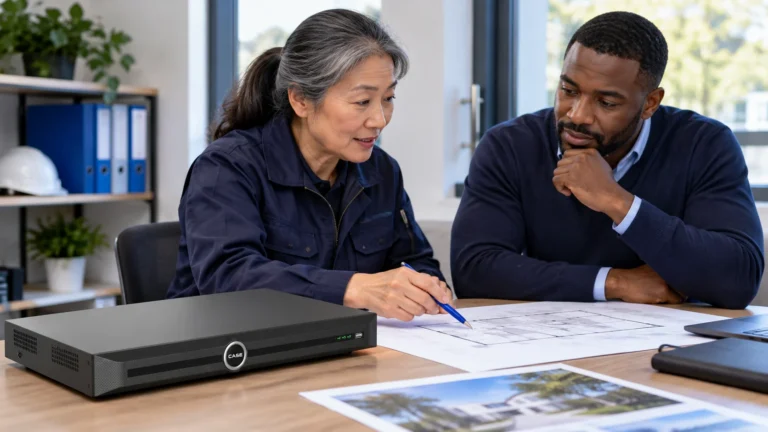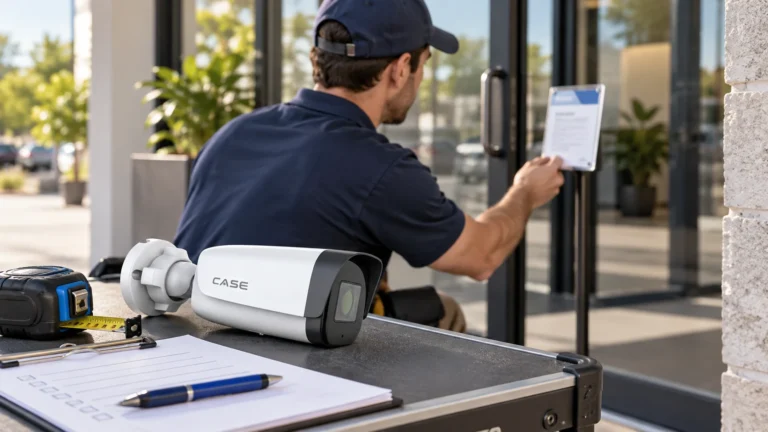



Quick answer: An anonymous installer case study should explain the customer’s requirement, your design decisions and the result you can substantiate. Obtain the necessary publication permissions, remove identifying and security-sensitive details, and have the final version reviewed before use. Omitting a company name or blurring a face does not by itself make the material anonymous or lawful to publish.
On this page
Agree publication before drafting
Discuss the proposed use with an authorized customer representative. Decide whether the story may identify the organization, describe only a broad site type or avoid site details entirely. Explain the intended channels, photographs, quotations and review process. Keep the approved final version with its permission record.
Customer approval is not automatically permission from identifiable staff, visitors, photographers or other rights holders. The Canadian meaningful-consent guidance explains purpose, disclosure and meaningful choice within its private-sector scope; it is not universal publication clearance. Check the actual privacy, confidentiality, contractual and copyright requirements, and omit material that cannot be cleared.
Specify how later correction or withdrawal requests will be handled. Do not promise that you can remove printed copies, third-party reposts or cached content everywhere. The approval should describe the practical process and any limits rather than an impossible universal deletion promise.
Use a problem–design–result structure
Start with the operational requirement: for example, a manager needed a usable view of an authorized entrance at night. Then describe the constraints and why you selected the approach. Explain how the installation was tested and what was actually observed. Readers should be able to distinguish the requirement from the measured result.
| Section | Your approved text / evidence |
|---|---|
| Situation | [Broad site type and context; only details cleared for publication] |
| Requirement | [What the customer needed to observe, retrieve or operate] |
| Constraints | [Lighting, access, pathways or phasing described without exposing weaknesses] |
| Design decision | [Approach, rationale and exact product identity if cleared] |
| Commissioning | [Authorized test, conditions, date and acceptance result] |
| Observed result | [Measured finding or clearly attributed customer observation; limitations] |
| Support | [Actual maintenance/handover arrangement, without invented service promises] |
| Publication record | [Approver, version, permitted channels, approved images and review date] |
Use the installation proposal template when the approved story supports a relevant prospect’s requirements. The worksheet is a writing aid, not a fictional customer project: leave results blank until evidenced. Permission to publish is separate from permission to name a reference contact or invite sales calls.
Remove identifiers and security details
Review combinations of details, not just names. A distinctive roof, a small town, a precise incident date and an unusual building count may identify a customer together. Generalize or remove details that are not necessary to explain your work. Do not describe a story as anonymous when its remaining details still make identification reasonably possible.
- Remove company branding, addresses, contact names, vehicle plates and recognizable faces unless specifically cleared.
- Exclude camera positions, blind spots, recorder locations, access procedures, IP addresses and login details.
- Inspect image reflections, backgrounds, screens, filenames, alt text and location metadata.
- Keep an unredacted job record secure; publish only the reviewed derivative.
The applicable privacy regime depends on jurisdiction and activity. Keep the source and scope of any consent advice clear, then confirm the rights and obligations for the actual proposed publication; a generic form does not settle them.
Show workmanship without exposing the site
A close mounting or cable-sealing detail can explain workmanship without a full site layout. The weatherproof cable-entry guide provides technical context, not proof that this installation was performed or tested. Review labels, serials, reflections and backgrounds before using even a close-up; disclose only approved details.
Use recorded footage only when needed, properly authorized and reviewed for its collection and proposed reuse. Blur alone may not prevent identification. A controlled staged demonstration can be an alternative: label it as a test, not the customer’s incident. Label generated illustrations separately; neither a synthetic site image nor a fabricated screen proves a completed installation or measured performance.
Keep results and testimonials defensible
Describe the test conditions and limits. Finding a staged event more quickly in a demonstration does not establish a universal time-saving percentage. A period without reported incidents does not prove a camera prevented crime. Distinguish measured results, the customer’s opinion and your design expectation.
For technical wording, ask security camera technical support with permitted requirements and the complete SKU/revision, not a confidential incident record. Confirm product facts and written warranty terms for the actual project; do not add blanket durations, unsupported badges or a suggestion that case-study publication establishes regulatory approval.
Keep an endorsement accurate and disclose a relevant material connection where required. The FTC’s 2023 announcement describes its updated truthful-endorsement and disclosure guidance. Customer approval of a quotation does not establish that an unmeasured performance claim is substantiated or provide a legal review of every publication.
Approve one version and track its use
Send the customer the complete text and actual image derivatives. Record the version and approval date, then publish only to the agreed channels. Maintain a simple use log so a correction can reach your website, customer newsletter and proposal library.
Use the customer newsletter guide when sharing the approved story with an appropriately permitted audience. Choose material relevant to the prospect’s requirement and the agreed channels; do not add unrelated products just to create links. Retain the approved version and permissions separately from confidential job evidence.
FAQ
Is an anonymous case study always safer to publish?
It can reduce disclosure, but the remaining details may still identify a person or site. Check permissions, confidentiality and security risks before publication.
What if there is no measured outcome yet?
Describe the requirement, installed approach and commissioning checks honestly. Say the longer-term outcome has not been measured instead of inventing a testimonial or percentage.
References
- OPC — meaningful consent and applicable Canadian privacy obligations
- FTC — 2023 endorsement-guides announcement and material connections