Identify the real recorder limit before choosing an external switch or larger NVR. Verify reusable infrastructure, complete workload, old-footage preservation and secure owner/client migration.
Count the recorded views the business needs and verify them on the survey. Use explicit early-budget assumptions, then size camera streams, recorder resources, power, storage and agreed growth separately.
Separate connection and viewing-performance faults, then trial supported streams against the actual client task and full network/recorder workload. Keep payload estimates distinct from measured results and preserve local recording quality.
Compare central and per-building recording using actual link capacity, power, storage, outage behavior and supported client workflows. Include complete costs and recorded acceptance tests.
Plan camera cable routes using the actual permanent-link, channel or MPTL design, cords, temperature and peak PoE. Assess remote cabinets, fiber and documented extensions with real test results.
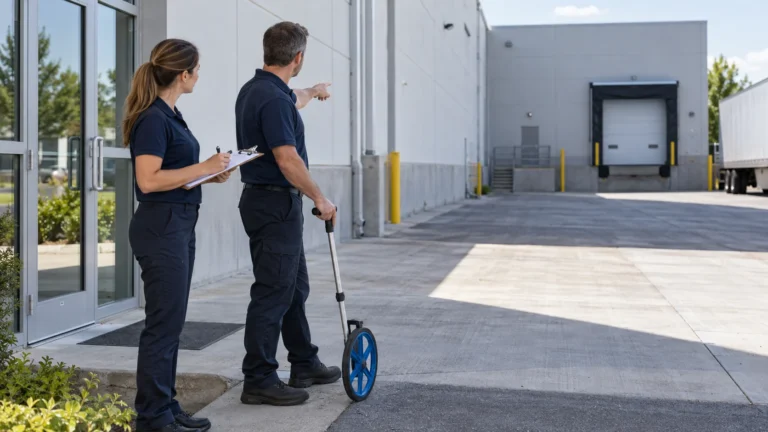
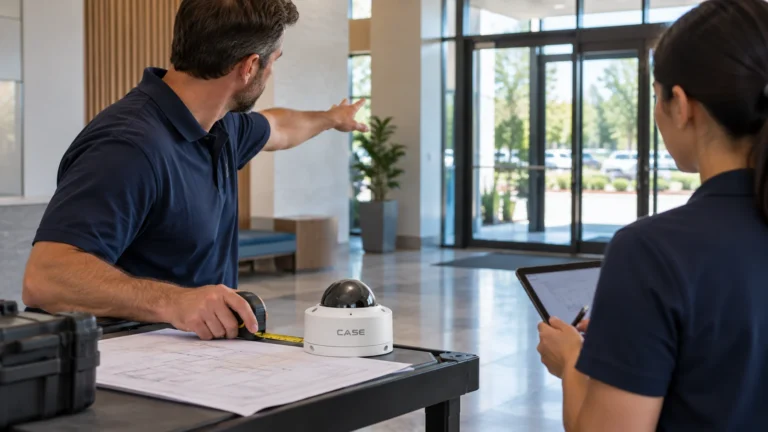
Use exact model field of view and recording resolution to estimate scene width and density. Generic lens-chart assumptions and historical DORI values do not guarantee identification; verify current requirements and actual recordings.
Compare 4MP, 5MP and 8MP by exact field of view, delivered recording mode, motion and night tests. Keep illustrative bitrate/storage arithmetic separate from measured workload and identification claims.
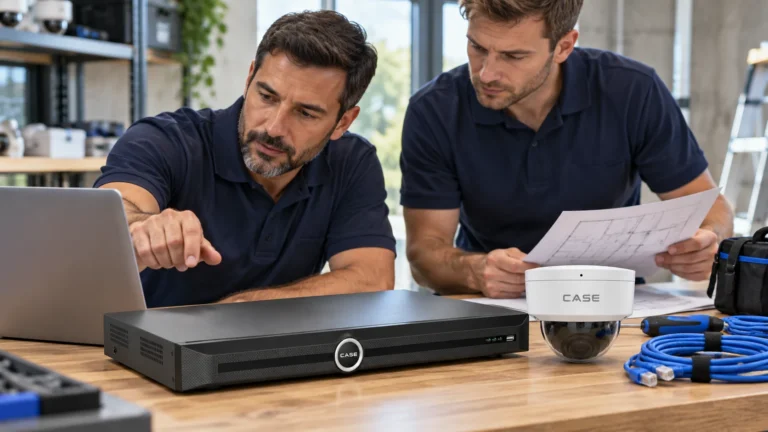
Verify actual channels/views, integrated and external power, input/output data, formats, decoding, AI and usable retention. Recorder and PoE counts are separate; supported complete-workload tests set the final camera capacity.
Calculate scene width and density using exact field of view and delivered pixels, with assumptions clearly marked. Separate historical DORI guides from current requirements and verify actual mounted recordings.
Choose H.264, H.265 or S+265 by the actual supported recording, client and export workflow. Verify moving detail and measured rates; no fixed half-bitrate or headline storage saving is guaranteed.
9 min read
Manage Consent
To provide the best experiences, we use technologies like cookies to store and/or access device information. Consenting to these technologies will allow us to process data such as browsing behavior or unique IDs on this site. Not consenting or withdrawing consent, may adversely affect certain features and functions.
Functional
Always active
The technical storage or access is strictly necessary for the legitimate purpose of enabling the use of a specific service explicitly requested by the subscriber or user, or for the sole purpose of carrying out the transmission of a communication over an electronic communications network.
Preferences
The technical storage or access is necessary for the legitimate purpose of storing preferences that are not requested by the subscriber or user.
Statistics
The technical storage or access that is used exclusively for statistical purposes.The technical storage or access that is used exclusively for anonymous statistical purposes. Without a subpoena, voluntary compliance on the part of your Internet Service Provider, or additional records from a third party, information stored or retrieved for this purpose alone cannot usually be used to identify you.
Marketing
The technical storage or access is required to create user profiles to send advertising, or to track the user on a website or across several websites for similar marketing purposes.