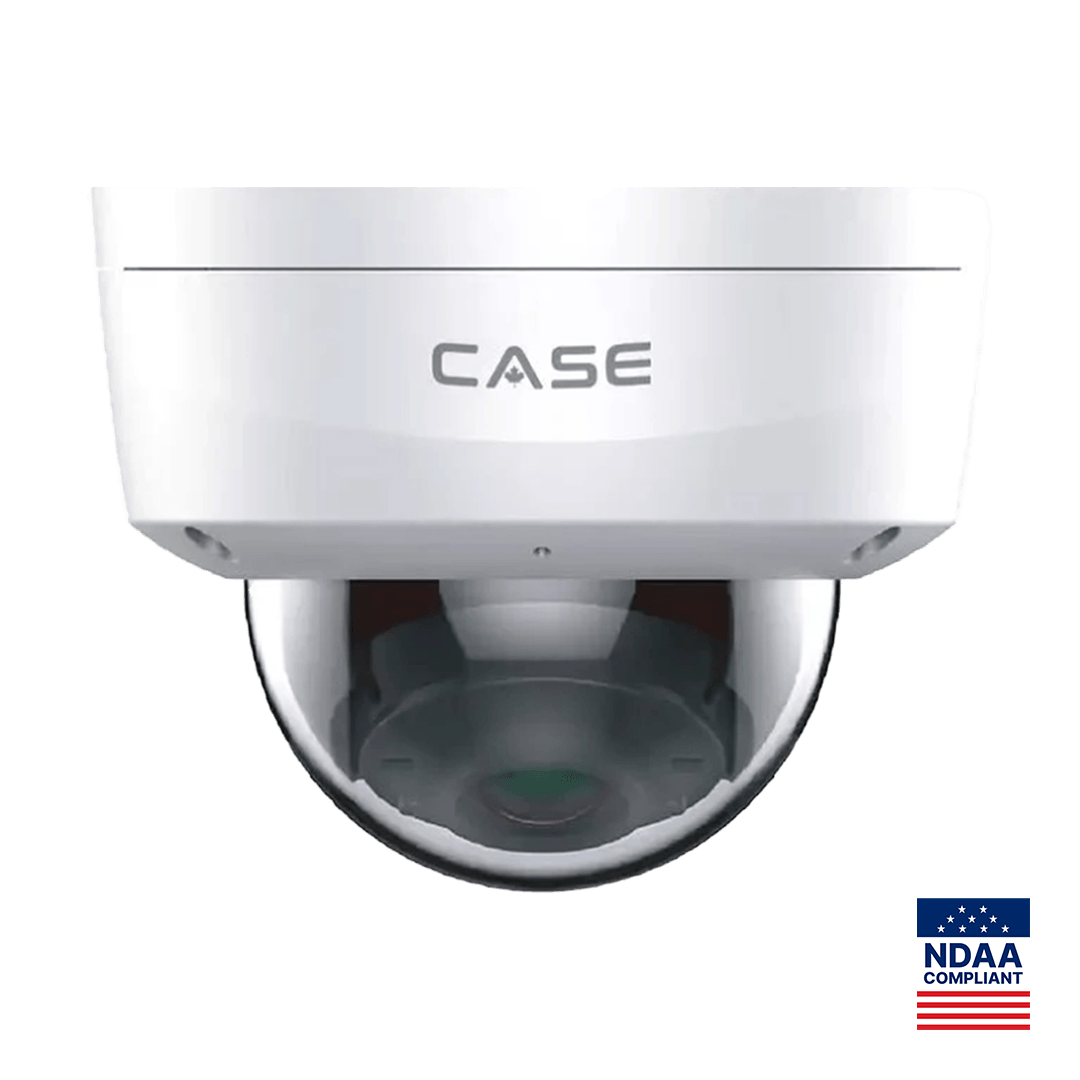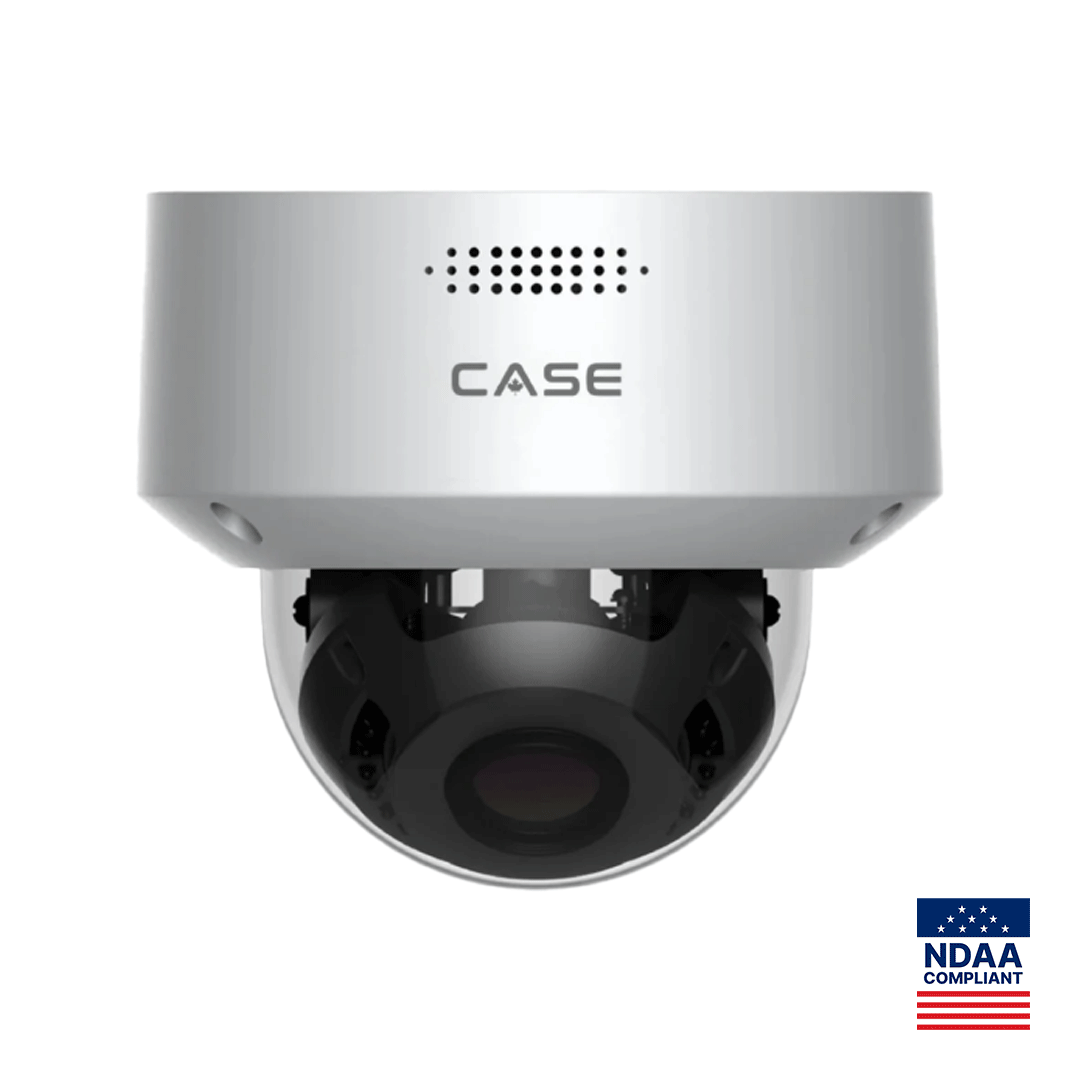



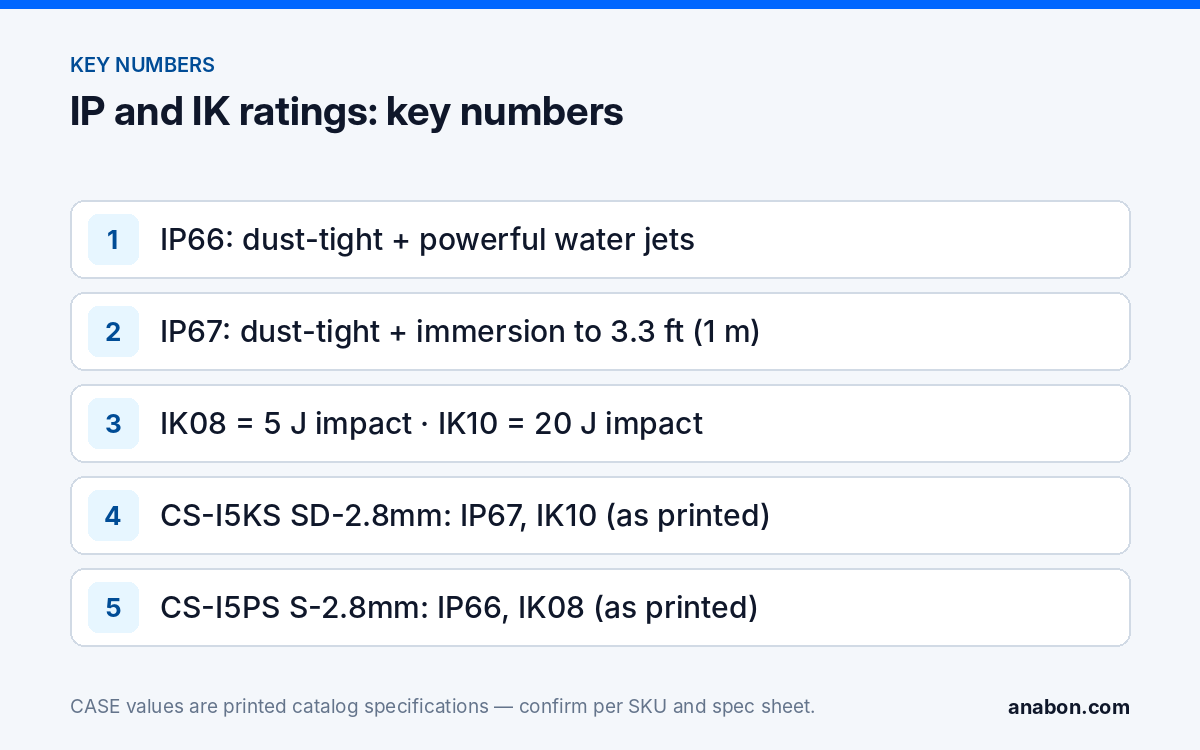
Quick answer: IP66 and IP67 both mean dust-tight (first digit 6); the second digit is the water test, and the two tests differ: 6 is powerful water jets from any direction, 7 is temporary immersion to 3.3 ft (1 m) for 30 minutes. IK10 comes from a separate standard, IEC 62262, and means the housing survived a 20-joule impact, roughly an 11 lb (5 kg) mass dropped from 16 in (400 mm). Read all three per SKU from the specification sheet: two CASE 5MP domes, CS-I5KS SD-2.8mm and CS-I5PS S-2.8mm, print IP67/IK10 and IP66/IK08 respectively.
What do the two IP digits actually test?
The IP code (Ingress Protection) is defined in IEC 60529. The first digit rates protection against solids and dust, the second against water, and each digit is a pass on one laboratory test. Two consequences matter on site. A camera is not “IP66 or better”: immersion is static pressure and a jet is dynamic, so IEC 60529 treats a housing rated only 7 or 8 as unsuitable for jet exposure unless it is dual-coded (“IP66/IP67”). And the test is run on a new sample at room temperature; it promises nothing about an aged gasket, a loose gland, or a housing opened on site and not reseated.
| Digit | First digit (solids) | Second digit (water) | On a camera site |
|---|---|---|---|
| 5 | Dust protected: limited ingress, no harmful deposit | Jets from a 1/4 in (6.3 mm) nozzle, 3.3 gal/min (12.5 L/min), from 10 ft (3 m), 3 minutes | IP65: rain and a garden hose |
| 6 | Dust-tight: no ingress under a vacuum test | Powerful jets from a 1/2 in (12.5 mm) nozzle, 26 gal/min (100 L/min), from 10 ft (3 m), 3 minutes | IP66: driving rain, blown dust, routine hose-down |
| 7 | Not used | Temporary immersion, lowest point 3.3 ft (1 m) under water, 30 minutes | IP67: standing water, snowmelt pooling in a soffit, low mounts |
| 9K | Not used | Close-range high-pressure wash-down at about 176 °F (80 °C) | IP69K: pressure-washer cleaning; not implied by IP66 or IP67 |
In plain terms, IP66 answers “can it be hosed down from any angle” and IP67 answers “can it sit under water for half an hour”. A pressure washer held at 12 in (30 cm) is outside both tests.
What does an IK rating add that IP does not?
The IK code (IEC 62262, formerly EN 50102) rates protection against external mechanical impact. A hammer of defined mass is dropped or swung from a defined height; the housing passes if it still provides its rated protection and the camera still works. The scale is written in joules on both sides of the border; IK10 is its top.
| IK level | Impact energy | Equivalent test | Site translation |
|---|---|---|---|
| IK08 | 5 J | 3.7 lb (1.7 kg) from 12 in (300 mm) | Thrown stone, cart hit, careless cleaning |
| IK09 | 10 J | 11 lb (5 kg) from 8 in (200 mm) | Deliberate kick at a reachable camera |
| IK10 | 20 J | 11 lb (5 kg) from 16 in (400 mm) | Strike with a bat or hammer; the vandal-resistant class |
The search phrase is “vandal proof camera”, but no standard uses that word and it does not belong on a proposal. IK10 covers the enclosure under one standardized blow; it says nothing about the bracket, the cable, the junction box, a reachable camera being twisted off aim by hand, or the window staying clear after the hit. Vandal resistance is a system: an IK10 housing, a mounting height above arm’s reach, tamper-resistant screws, concealed cabling, and one camera that watches the others.
Which rating matters on which site?
Decide from the hazard in front of you, not from the highest number in the catalog: what will hit it, and what will wet it.
- Parking structures, transit stops, school corridors and stairwells, correctional and public-housing sites: IK10, plus mounting height. A camera at 7 ft (2.1 m) is reachable whatever its IK level; 10 ft (3 m) or higher removes most casual contact.
- Food processing, car washes, kitchens, docks that get hosed down, agricultural buildings: IP66 covers the hose-down test; add IP67 where water pools and IP69K where pressure washers are used.
- Low mounts near grade, flood-prone yards, soffits that trap snowmelt, marinas: IP67 immersion is the relevant figure. For the cold side of these sites, see security cameras for cold weather.
- Coastal and road-salt exposure: no IP or IK digit covers corrosion. Note the housing material as printed (CASE sheets print “Metal”, “Metal+Plastic” or “Plastic”) and treat salt as its own spec line.
- Interior retail, office and lobby: IK10 wherever the camera sits within reach of the public.
How do the ratings read on CASE spec sheets?
CASE prints a “Protection” row (“IP67, IK10”, “IP66, IK08”) and a “Housing” row. Four examples from the CASE Catalog 2027 Q1, as printed:
| SKU | Form | Protection | Housing | Operating conditions | Where it fits |
|---|---|---|---|---|---|
| CS-I5KS SD-2.8mm | 5MP dome, IR 98 ft (30 m), white light 33 ft (10 m) | IP67, IK10 | Metal+Plastic | −31 °F to 149 °F (−35 °C to 65 °C) | Reachable positions with impact and standing water |
| CS-I5PS S-2.8mm | 5MP dome, IR 98 ft (30 m), audio 1/1, alarm 1/1 | IP66, IK08 | Metal | −40 °F to 149 °F (−40 °C to 65 °C) | Walls and eaves above reach, cold sites, audio or alarm I/O needed |
| CS-I8MS I-2.7-13.5mm | 8MP varifocal dome, IR 164 ft (50 m), Advanced AI | IP66, IK10 | Metal | −31 °F to 149 °F (−35 °C to 65 °C) | Parking structures, entrances and docks; lens set on site |
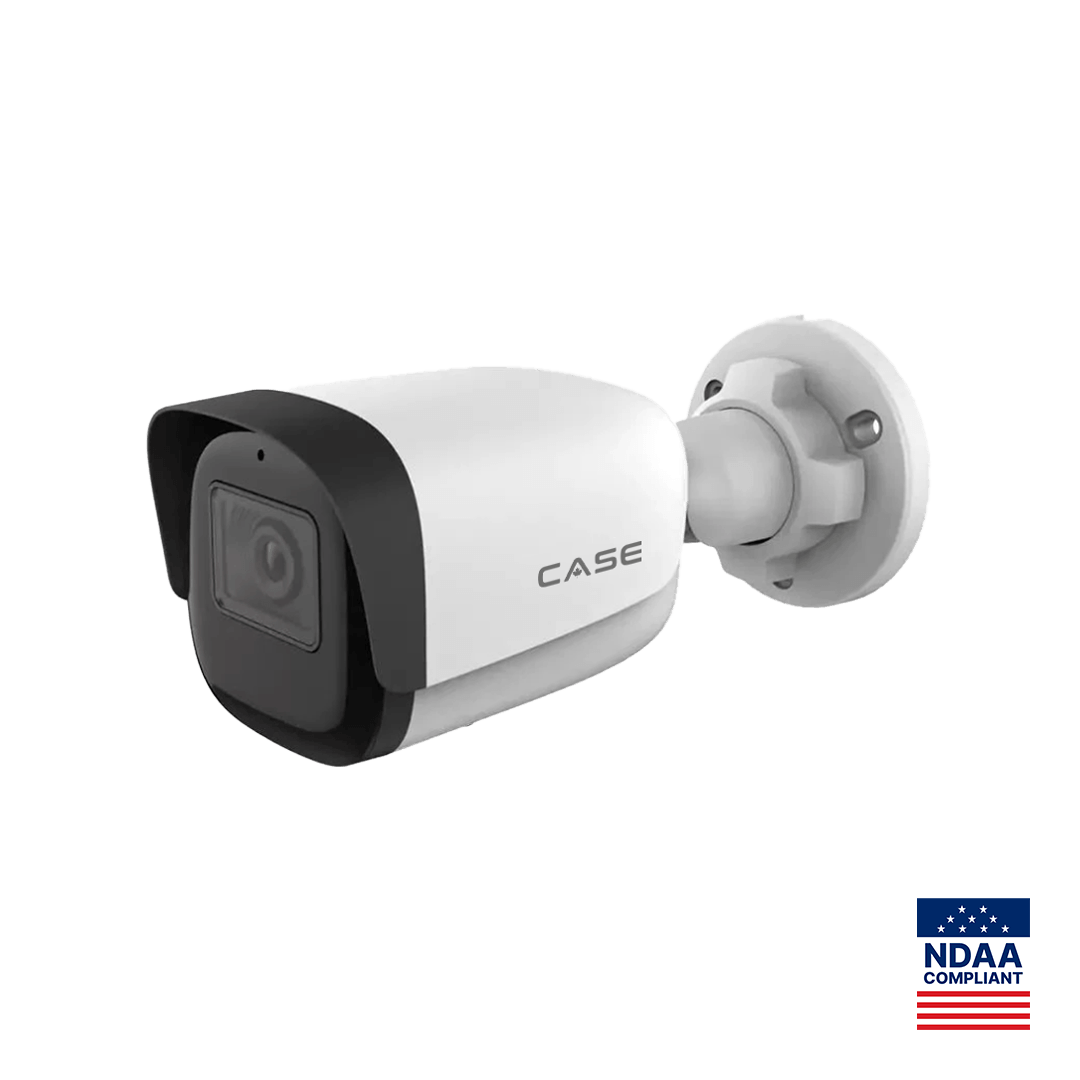
| CS-I8WS S-2.8mm | 8MP bullet, IR 164 ft (50 m) | IP67 | Metal | −40 °F to 149 °F (−40 °C to 65 °C) | Perimeters and poles above reach; no IK level printed, so quote none |
Three reading rules. One letter changes the sheet: CS-I5KS SD-2.8mm and CS-I5PS S-2.8mm are both 5MP Sharp Series domes with different protection lines. A rating that is not printed is not a rating: the bullet above prints IP67 only, so do not add an IK value. And where website and catalog disagree on a protection class or temperature (it happens on several SKUs), the SKU specification sheet governs, then the catalog; ask Anabon for the spec sheet before a bid. All four are CASE cameras: CASE cameras carry a 6-year warranty, handled through the installer or dealer.
Site-survey checklist for ratings
- Reach: can a person touch the camera from the ground, a railing, a vehicle roof or a dumpster? If yes, IK10 and a tamper-resistant mount.
- Water: rain only, hose-down, pressure washer, or pooling? Match the second digit to the worst case.
- Dust and corrosion: grain, sawdust, cement, salt, chlorine, cleaning chemicals. First digit 6; note the housing material for corrosion.
- Temperature: compare the printed operating range with the local design low and high.
- Record the printed Protection row per SKU in the camera schedule, exactly as printed.
NEMA vs IP: how do you answer a spec that says “NEMA 4X”?
US specifications written by electrical consultants often call for enclosure types from NEMA 250, listed under UL 50 / UL 50E; in Canada the equivalent is CSA C22.2 No. 94.2. NEMA types also cover corrosion resistance (the “X”), external icing, oil and coolant, and gasket aging; IP codes do not. NEMA’s own comparison therefore runs one way: a NEMA type can be said to meet an IP code, but an IP code cannot be converted into a NEMA type.
- NEMA 4 is roughly comparable to IP66 (hose-directed water, wind-blown dust).
- NEMA 4X adds corrosion resistance, which IP66 does not address.
- NEMA 6 is roughly comparable to IP67 (temporary submersion); NEMA 6P to IP68.
Camera specification sheets, CASE sheets included, print IP and IK codes rather than NEMA types. When an RFP asks for “NEMA 4X cameras”, list the printed IP code per SKU, state the housing material, note that IP66 or IP67 covers the water and dust portion of NEMA 4X, and have the consultant accept that in writing (see how to read a video surveillance RFP).
Which installation details protect the rating you specified?
A rating belongs to a sealed, correctly assembled housing; water ingress is more often traced to the cable entry or an unseated gasket than to the housing itself.
- Bring the cable into a junction box or through a sealed gland; never leave an RJ45 connector in open air behind the camera. Mount and box compatibility is per the accessory spec sheet.
- Reseat gaskets after aiming; a dome or turret opened on site and closed wet has lost its rating until the seal is reseated dry.
- Use tamper-resistant screws (Torx or pin-in-hex) wherever the housing and mount provide for them.
- Mount at 10 to 12 ft (3 to 3.7 m) where the site allows; where it does not, pick the form factor accordingly (see turret vs dome vs bullet), and form a drip loop at every cable entry.
- Photograph the finished seal for the handover package.
What to tell your customer
“The entrance domes on your system are rated IP67 and IK10 on the manufacturer’s specification sheet: dust-tight, tested for temporary immersion, and tested against a 20-joule impact. Those ratings describe the housing under a standard laboratory test, which is why we also set the mounting height, used tamper-resistant screws and sealed the cabling. Warranty and service run through us as your installer.”
FAQ
Is IP67 better than IP66 for an outdoor security camera?
Not automatically. IP66 is a powerful water-jet test and IP67 is a 30-minute immersion test at 3.3 ft (1 m); IEC 60529 does not rank one above the other, and a housing marked only IP67 is not assumed to pass the jet test. Specify IP66 for hose-down sites, IP67 for standing water, and a dual-coded sheet where both apply.
Does IK10 make a camera vandal proof?
No. IK10 means the housing passed a 20-joule impact test, about an 11 lb (5 kg) mass from 16 in (400 mm). It does not rate the bracket, cable or junction box, and it does not stop someone twisting a reachable camera off aim. Write “vandal-resistant”, and pair the rating with mounting height and tamper-resistant screws.
Can I install an IP66 camera where the crew hoses the area down?
Yes, within the test: IP66 covers jets from a 1/2 in (12.5 mm) nozzle at 26 gal/min (100 L/min) from 10 ft (3 m). A pressure washer held close to the housing exceeds that, as does hot wash-down; those sites call for IP69K or a position outside the spray zone. Ask how the area is cleaned before picking the SKU.
Why does a website show a different IP rating than the catalog for the same CASE SKU?
Product pages and catalogs are updated on different cycles, and several CASE SKUs have shown different protection or temperature values on the web than in the CASE Catalog 2027 Q1. The spec sheet for the exact SKU governs, then the catalog, then website copy. Before a bid, request the spec sheet from Anabon and quote the Protection row as printed.
Does a higher IP or IK rating change the warranty?
No. Warranty is stated by product category, not by rating: CASE cameras carry a 6-year warranty, and CASE PTZ cameras carry a 3-year warranty. Both are handled through the installer or dealer who supplied the system, never directly with the end user. The rating tells you where the camera can go; the warranty term follows the category.