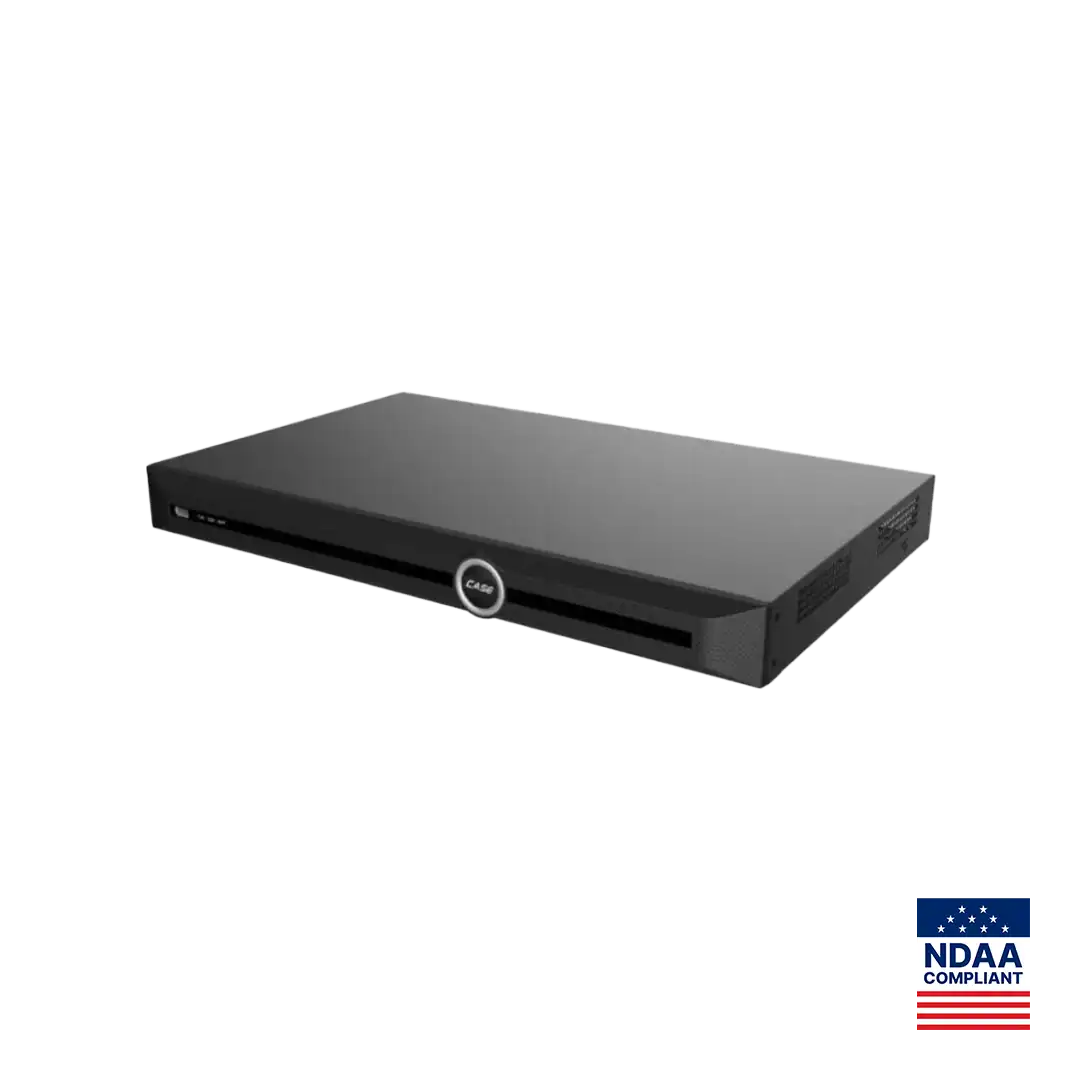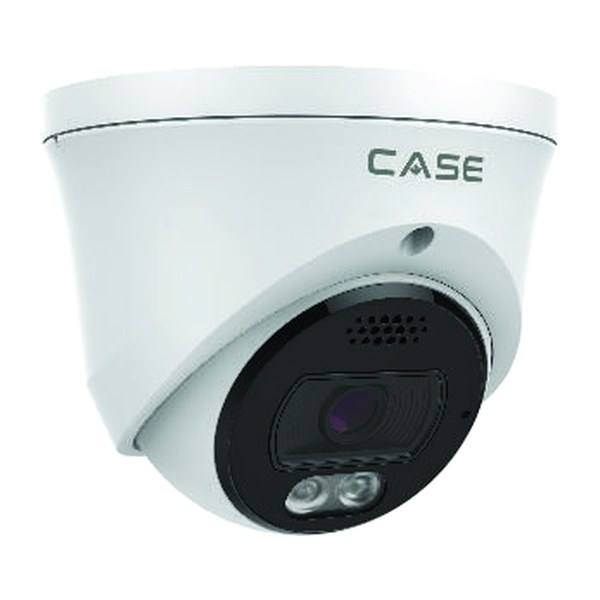



Quick answer: A procurement reviewer does not accept a brand badge; they match documents to the SKUs on your camera schedule. Before you answer the consultant, ask your distributor for five items per SKU: the compliance statement naming the exact model, the spec sheet, the hardware and firmware version statement, a project-specific written confirmation, and the inputs for the certification you sign yourself (the FAR 52.204-24 / 52.204-26 representations on US federal work, per the current clause text; the tender’s declaration in Canada). CASE offers NDAA-compliant options for compliance-sensitive projects. Anabon confirms the exact products and provides the official compliance documentation for each project.
Why is the document, not the brand, the answer on a compliance bid?
Section 889 of the FY2019 National Defense Authorization Act attaches to equipment: a specific model, its components and the companies behind it, including subsidiaries and affiliates. Our guide to what NDAA compliance means for security cameras covers the statute; this article covers the paperwork. Whoever reviews your submittal works from an equipment list and puts the SKU on your drawing next to a document that names that SKU. A catalog cover, a website logo or a brand-level letter describes a brand; your bid names models, so it needs model-level evidence.
In the US the reviewer applies Section 889, the grant condition in 2 CFR 200.216, or a state restriction on covered equipment for public bodies (in Canada: we know of no statute mirroring Section 889, so verify with counsel; federal and provincial tenders carry supply-chain security clauses case by case, and a Canadian integrator on US federal work or a US federally funded site is generally bound by the same contract or grant terms as a US firm). In both countries the method is the same: one document per SKU, matched to the schedule. Anabon Security Inc. is a North American B2B distributor of CASE and other professional security brands, and assembling that pack with you is part of what the channel receives.
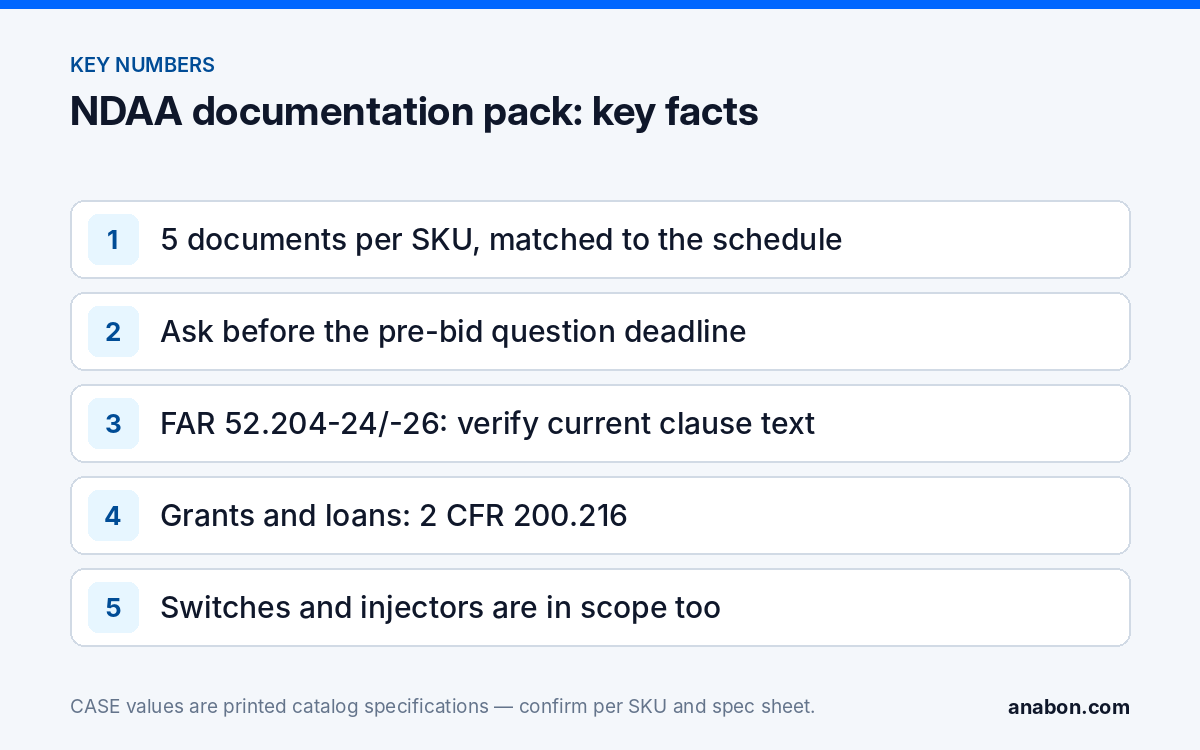
Which five documents does a reviewer expect per SKU?
| # | Document | What it must name | Who issues it | When you need it in hand |
|---|---|---|---|---|
| 1 | Per-SKU compliance statement (the “NDAA compliance letter”) | The exact model in catalog spelling (for example CS-N220 P16H-AI, never the model number alone), the rule addressed (Section 889), the hardware or firmware version where issued that way, a date and a signatory | The brand or its authorized distribution channel, supplied through Anabon | Before the pre-bid question deadline |
| 2 | Spec sheet | The same SKU spelling as the schedule, with the printed rows the reviewer compares against the specification | The brand; via Anabon or the product page | With the equivalence table or substitution request |
| 3 | Hardware and firmware version statement | The version the compliance statement covers and the version that will ship; where it is read on the device (system information page) | Anabon, dated, per project | At submittal, and again at delivery for the O&M manual |
| 4 | Project-specific written confirmation | Project name, buyer type, SKU list with quantities, date; which lines are documented and which need a documented alternative | Anabon, in writing | Before you sign the proposal |
| 5 | Your own representation | US: the FAR 52.204-24 offer representation and the 52.204-26 annual representation in SAM, as the solicitation requires; grant-funded buyers: the 2 CFR 200.216 condition (verify the current clause text with counsel). Canada: the tender’s supply-chain declaration. State what it rests on (documents 1 to 4) | You, the offeror | With the bid; a copy in the project file |
Three items are often requested alongside and belong in the same tab: the warranty statement by category (stated exactly per category, never as one blanket term), a per-SKU ONVIF profile statement where a third-party VMS is specified, and a separate TAA statement where the RFP asks for it. TAA and NDAA are different rules answered by different documents.
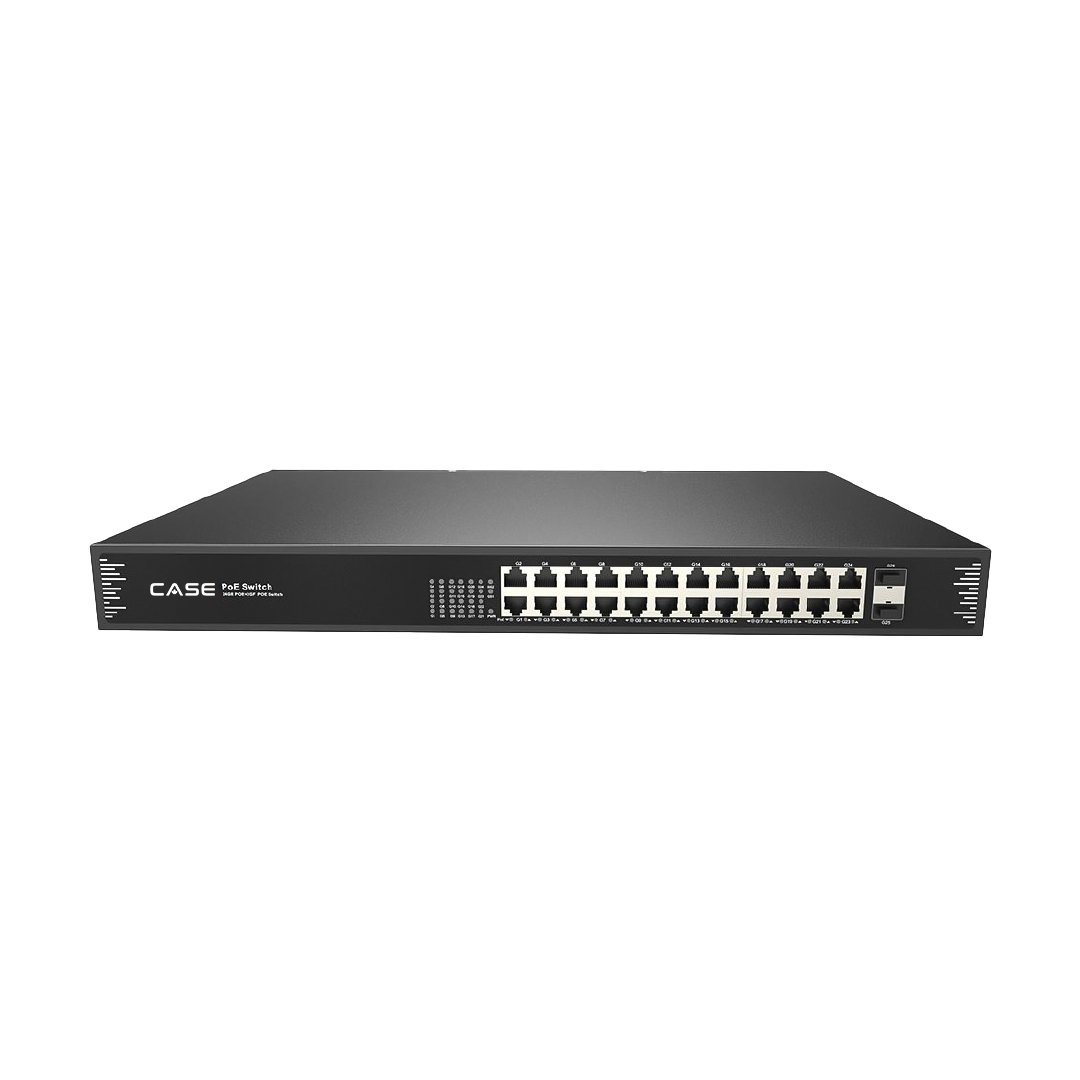
Network equipment is reviewed under Section 889 as well. A PoE switch such as the CS-POE33024PF (24 10/100/1000M RJ45 PoE ports with two 1000M SFP fiber uplinks, as printed) needs the same per-SKU treatment as the cameras, as do injectors and the recorder.
When should you ask: before you answer the consultant
The consultant’s question is usually one line: “Confirm that the proposed cameras and recorder are NDAA compliant.” A verbal yes, or a yes that rests on a brand badge, becomes your representation the moment you submit. The safe sequence follows the bid calendar:
- RFP release. Read the compliance section and the funding reference first (our guide on reading a video surveillance RFP shows where that language hides). Send your draft SKU list to your distributor the same day.
- Pre-bid question deadline. Ask the consultant what the clause requires: Section 889 only, a state covered-equipment rule, an FCC equipment authorization statement, a specific firmware version, or TAA as well. Undocumented lines get a documented alternative before this date, while substitution is open.
- Or-equal / substitution window. Attach documents 1 and 2 to the equivalence table.
- Bid submission. Documents 1 to 5 complete, dated and cross-referenced to the schedule.
- Post-award submittals. Re-confirm the version against the units that will ship (document 3).
- Handover. The pack goes into the O&M manual with the as-built camera schedule.
Ask early. Lists, firmware and requirements move, so the confirmation is per project and dated, and a pack requested after the question period closes cannot change which models you may propose. Give the consultant the date on the confirmation you hold, not a turnaround you do not control.
How do you present the documents in a proposal?
Reviewers read in order and stop at the first gap. Put the compliance material in its own tab, lead with the per-SKU statements and open with a cover sheet that ties every schedule line to its documents. Copy this layout into your proposal template:
| Line | Qty | SKU (catalog spelling) | Compliance statement | Spec sheet | Version statement | Project confirmation | Notes |
|---|---|---|---|---|---|---|---|
| C-01 | 24 | CS-I8XQ II-2.8mm | Doc 1.1, dated | Doc 2.1 | Doc 3, line 1 | Doc 4 | Turret, 8MP / 2.8mm fixed as printed |
| R-01 | 2 | CS-N220 P16H-AI | Doc 1.2, dated | Doc 2.2 | Doc 3, line 2 | Doc 4 | 20CH recorder, 16 PoE ports as printed |
| N-01 | 1 | CS-POE33024PF | Doc 1.3, dated | Doc 2.3 | Doc 3, line 3 | Doc 4 | Network equipment is in scope |
| — | — | Offeror representation | FAR 52.204-24 (US) or tender declaration (Canada) | Signed copy | |||
Four rules keep the tab credible. Use one SKU spelling everywhere (schedule, bill of materials, cover sheet, file names); CS-I8XQ I-2.8mm and CS-I8XQ II-2.8mm are different generations with different spec sheets, and a letter for one is not evidence for the other. Date every page and mark drafts as drafts. State in one sentence what your own representation rests on: “Documents 1.1 to 1.3, per SKU and dated, with project confirmation Doc 4.” The bid-ready documentation checklist covers the rest of the submittal package.
Which mistakes fail a procurement review?
- A brand-level letter (“all products of this brand are NDAA compliant”) placed in front of, or instead of, per-SKU statements.
- A shortened SKU, or a series letter dropped. One letter can change the series, housing and specifications.
- Undated statements, or a statement issued for a version other than the one that ships.
- Cameras documented, switches and injectors forgotten.
- A TAA statement offered in place of a Section 889 statement, or the reverse.
- A catalog cover, a website badge or the word “NDAA” in a product name treated as a document.
- Answering an origin question with an opinion. The only answer that survives review is: Product documentation is supplied per SKU. For any project with origin, NDAA, or other compliance requirements, Anabon provides the official per-SKU documentation and project-specific confirmation — the document is the answer, so your bid survives a procurement review.
How does Anabon’s per-SKU documentation service work?
Send the SKU list from your camera schedule with quantities, the project name, the buyer type, the compliance clause or funding announcement page, the submittal deadline, and whether TAA or an FCC statement is also requested. Anabon confirms which exact products are documented for that requirement, proposes a documented alternative where a line is not, and supplies the official compliance documentation for each project with the written confirmation.
Anabon makes no statement about where products are made, in any direction; the per-SKU document carries what the reviewer needs to see. And the confirmation is project-specific and dated, so a pack issued for one bid is not reused on the next without re-confirmation. Anabon does not deal with your end customer: the pack goes to you, and the relationship stays yours. Compliance documentation as a service describes the process; if a compliance clause is making you pass on a bid, bring it to us through bid opportunities.
What to tell your customer
“Section 889 applies to the equipment on your drawing, not to a brand name, so we document every camera, recorder and switch individually. Our submittal includes a dated compliance statement and spec sheet for each model, matched to the schedule, plus the certification our company signs. If your contract or funding carries other requirements, give us the clause now and we document against it before we order.”
FAQ
Is a letter saying the brand is NDAA compliant enough for a federal bid?
No. Section 889 is written about equipment, and the reviewer matches the SKUs on your schedule to documents that name those SKUs. A brand-level letter matches nothing on the drawing. Ask for a per-SKU compliance statement, in catalog spelling and dated, for every camera, recorder, switch and injector on the bill of materials, and place those in front of any general statement.
Which products need documentation, only the cameras?
Every item on the schedule that is telecommunications or video surveillance equipment: cameras, the NVR, PoE switches, injectors and extenders. Network equipment is reviewed under Section 889 as well, and a pack that documents the cameras but not the switch has a gap the reviewer will find first. Treat the whole bill of materials as the scope of the request.
How early should I ask my distributor for the pack?
On the day the RFP is released, with your draft SKU list. The pre-bid question deadline is the last point at which an undocumented line can be swapped for a documented alternative; after it you own the claim. Confirmation is per project and dated, so ask early rather than asking for speed, and never quote the consultant a turnaround you do not control.
What if one model on my schedule is not documented?
Ask for a documented alternative before the substitution window closes and attach its compliance statement and spec sheet to the equivalence table. Do not submit a brand-level assurance in place of the missing document. CASE offers NDAA-compliant options for compliance-sensitive projects. Anabon confirms the exact products and provides the official compliance documentation for each project.
Do Canadian tenders ask for the same documentation pack?
We know of no Canadian statute mirroring Section 889; verify with counsel. Federal and provincial buyers set supply-chain security requirements case by case in the tender, and the same per-SKU method answers them: statement, spec sheet, version and project confirmation for each model. A Canadian integrator on US federal work or a US federally funded site is generally bound by the same Section 889 terms through the contract or grant, so build the full pack for that work.
References
- National Defense Authorization Act for Fiscal Year 2019 — Wikipedia
- Issue: Section 889 Compliance — Security Industry Association (SIA)
- What NDAA Section 889 Really Means for Federal Grants — Security Industry Association (SIA)
- Federal Acquisition Regulation — Wikipedia
- Submittals (construction) — Wikipedia