

Quick answer: The CASE Project Series is the CSP- line: explosion-proof cameras and accessories, long-range thermal systems, solar surveillance towers and trailers, and perimeter radars. Every CSP- item is project-quoted: availability, certificate documents, lead time and warranty term are confirmed per project in writing before anything is promised to the owner. Bring us the requirement before you decline the opportunity; the decision to bid starts with the site details, not with a catalog page.
What are the four CASE Project Series families?
The Project Series sits beside the standard CASE catalog line and uses the CSP- prefix. Each family solves a site problem that a standard camera cannot, and each is configured for the job.
| Family | Example SKUs | Typical sites |
|---|---|---|
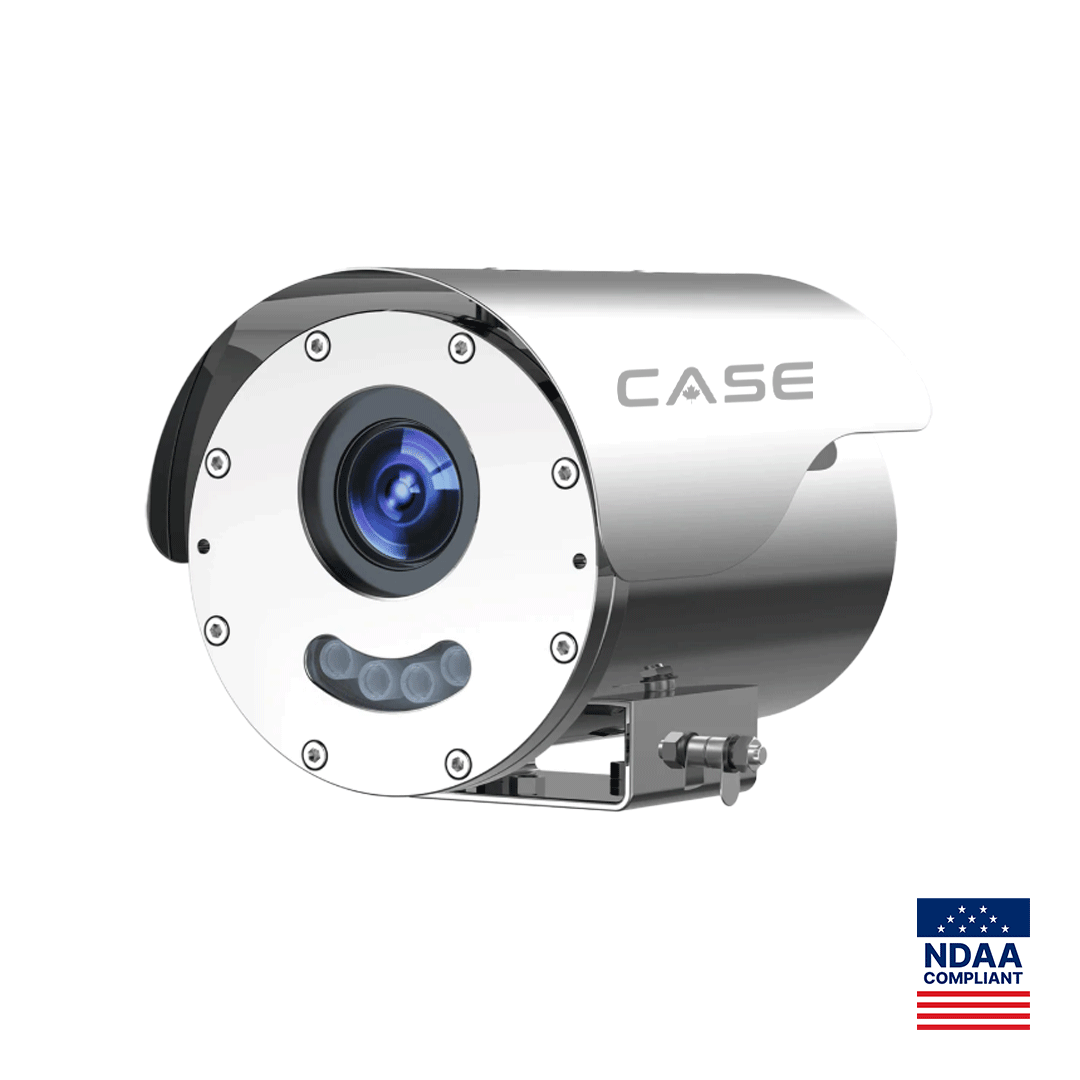
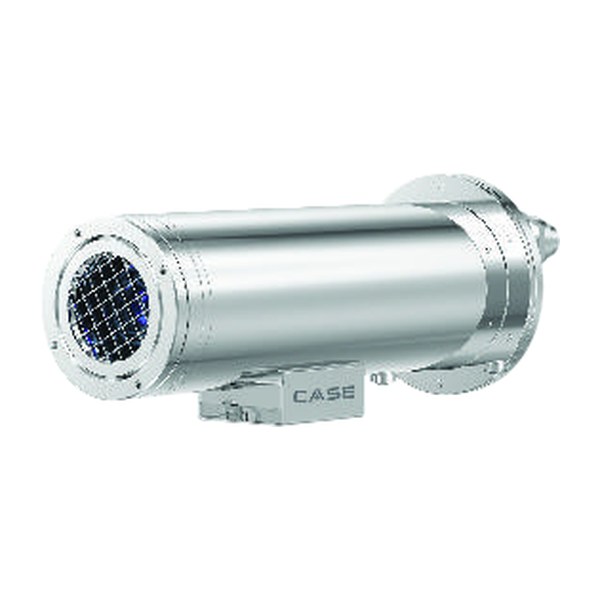
| Explosion-proof cameras and accessories | CSP-I8PS EX-I-2.7-13.5mm, CSP-I8MS EX I-2.7-13.5mm, CSP-P49S EX-63X, CSP-I384 EXT I-7/13/25mm; enclosures and fittings such as CSP-300 EX, CSP-FT EX and CSP-G EX | Fuel terminals, chemical and process plants, grain handling, wastewater, paint and solvent areas |
| Thermal solutions | CSP-I640R IT-13/19/25, CSP-P6409 IT-360, CSP-I1280R4 IZ-350/1200mm | Utility substations, ports, long fence lines, critical infrastructure |
| Solar towers and trailers | CSP-S2560H4L, CSP-S6000H7GW, CSP-S12000H9GWH | Construction sites, remote yards, temporary events, sites without power |
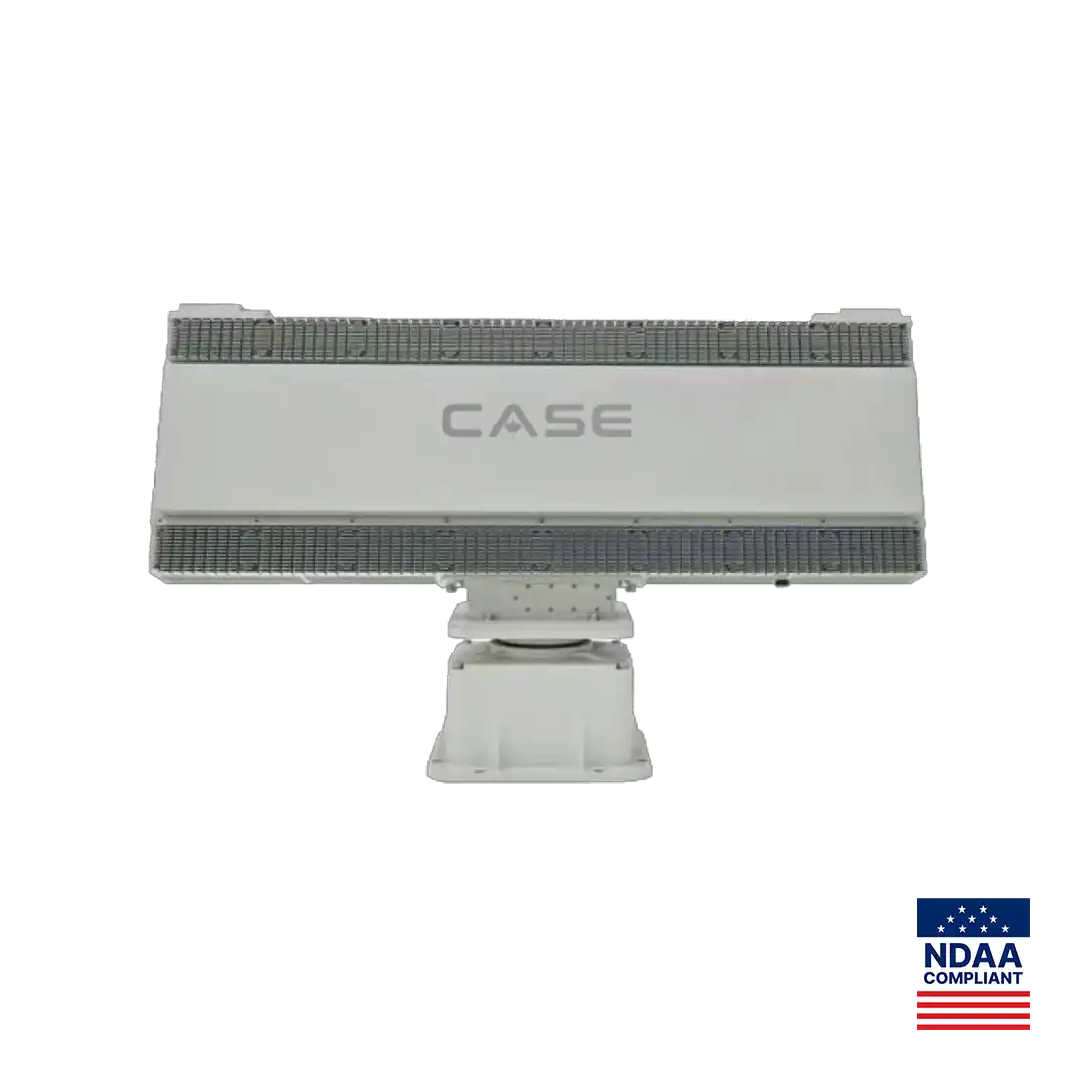
| Radars | CSP-RX3R-10K, CSP-RC2S-6K | Large perimeters, open land, water frontage, paired with PTZ cameras |
What should you know before you quote an explosion proof camera?
An explosion proof camera is one of the most documentation-heavy items a security installer quotes, and the questions start with the site, not the camera.
Start with the area classification
The owner or their engineer classifies hazardous locations; you do not. In the US, the NEC (NFPA 70) covers hazardous locations in Articles 500 to 506, using either the Class/Division system or the Zone system. In Canada, CEC Section 18 governs hazardous locations and uses the Zone system for new installations; verify the local code. Ask for the area classification drawing, the gas or dust group and the temperature class before you select a single SKU.
Read the printed marking, then ask for the documents
The CSP-I8PS EX-I-2.7-13.5mm spec page prints an IECEx marking row of Ex db IIC T6 Gb/Ex tb IIIC T80°C Db. In general terms, db is a flameproof enclosure, IIC is the most demanding gas group, T6 limits the surface temperature to 185 °F (85 °C), Gb is the equipment protection level for Zone 1, and the tb IIIC T80°C Db part covers conductive dust in Zone 21 with a 176 °F (80 °C) surface limit. Treat a printed marking as the starting point for verification, not as the certificate. ATEX and IECEx are European and international schemes; whether a marking is accepted for a North American hazardous location is decided by the authority having jurisdiction, so confirm the acceptance path early. Certificate documents are supplied per SKU and per project once Anabon confirms them in writing.
Printed examples
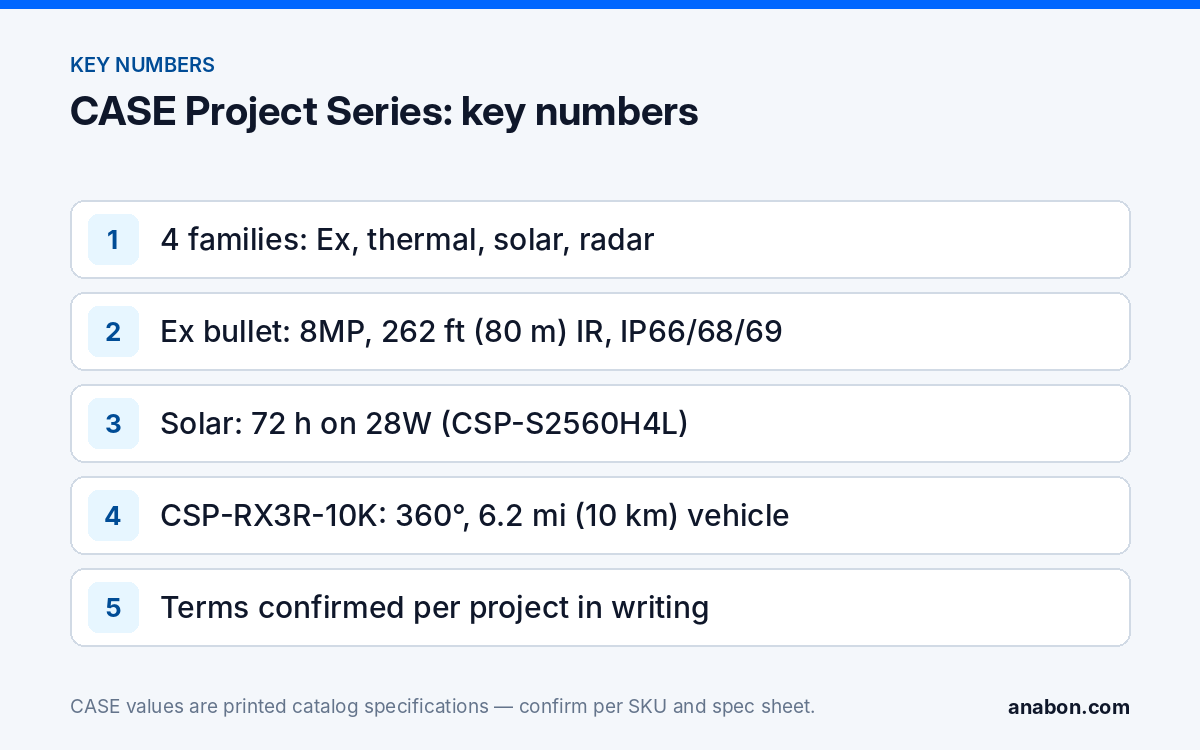
- CSP-I8PS EX-I-2.7-13.5mm: 8MP (3840×2160@20fps), 2.7mm – 13.5mm lens, 262 ft (80 m) IR, IP66, IP68 (6.6 ft (2 m), 2 h) and IP69, Stainless Steel 304 or 316L housing, audio 1/1, alarm 2/1 and a full on-camera AI list.
- CSP-I384 EXT I-7/13/25mm: 384×288 VOx thermal, 7 / 13 / 25 mm lens options, temperature measurement −4 °F to 302 °F (−20 °C to 150 °C) or 32 °F to 1,022 °F (0 °C to 550 °C), Gas Zone 1 and 2 / Dust Zone 21 and 22 printed, defroster and wiper, power 12VDC / 24V AC/DC / 100–240VAC / PoE++, operating −40 °F to 140 °F (−40 °C to 60 °C).
For a deeper look at the two classification systems, see explosion-proof cameras: Class/Division vs Zone.
What do the thermal, solar and radar families add?
Thermal solutions
Fixed and pan-tilt thermal systems detect people and vehicles by heat, in the dark and at ranges beyond what a visible camera covers at night. The CSP-I640R IT-13/19/25 prints a 640×512 VOx detector and human detection up to 3,419 ft (1042 m) with the 25 mm lens, with vehicle detection up to 10,479 ft (3194 m). At the long end, the CSP-I1280R4 IZ-350/1200mm prints vehicle detection at 27.8 mi (44.7 km) and human detection at 9.1 mi (14.6 km). Printed detection distances are for ideal conditions; line of sight and weather decide the real figure.
Solar towers and trailers
Off-grid units carry the camera, recorder and router where no power exists. The CSP-S2560H4L prints a 1×450W bifacial panel, 2560Wh LFP battery, an 11.5 ft (3.5 m) mast, 72 hours of running time on a 28W load and a weight of 794 lb (360 kg). The CSP-S6000H7GW prints a 1×720W panel, 6000Wh GEL battery, a 21.3 ft (6.5 m) mast, 72 hours of backup under a 66W load, a 1.5kW AC charger and a blue and white strobe. The printed runtime holds only at the printed load: add up the real camera, router and recorder draw before you choose a unit. See construction site security cameras for deployment notes.
Radars
A radar detects movement across open ground; a PTZ then verifies what it is, with the radar-to-PTZ linkage confirmed per project. The CSP-RX3R-10K prints X-band, 360° azimuth coverage and an effective detection range of 328 ft to 5.0 mi (100 m to 8 km) for a person and up to 6.2 mi (10 km) for a vehicle, at ≤400W. The CSP-RC2S-6K prints C-band, ≥90° azimuth, 2.5 mi (4 km) for a person and 3.7 mi (6 km) for a vehicle, at ≤60W. Radar and PTZ are designed and quoted together as one perimeter package, per project.
Why is the Project Series quoted per project?
- Configuration changes the product. Housing grade (304 or 316L), lens option, power input, fiber or copper, and mast height all change the order line and, for explosion-proof items, the documents that apply.
- Certificates are per SKU and per configuration. The CSP-I8MS EX I-2.7-13.5mm, for example, prints different ATEX markings with and without optical fiber.
- Site physics decide the design. Detection ranges, solar autonomy and radar coverage depend on terrain, latitude, load and line of sight.
- Bids need written answers. An owner’s engineer will ask for documents, schedules and terms that only a written project confirmation can give.
That is why no warranty term, availability, certificate or lead time is stated for CSP- items in general content: each one is confirmed per project in writing.
What does Anabon confirm in writing before you commit?
| Item | What is confirmed | Why it matters to your bid |
|---|---|---|
| Availability | Whether the configured SKU can be supplied for the project | You do not bid a product you cannot deliver |
| Certificate documents | The certificate set that matches the exact configuration | The submittal must match the installed unit |
| Lead time | A written lead time for the configured order | Your schedule and liquidated damages depend on it |
| Warranty term | The term that applies to that project | Your warranty statement to the owner must be exact |
| Compliance | Per-SKU compliance documentation | Procurement reviews ask for documents, not assurances |
| Integration | Recorder or VMS behavior with the CSP- device | Commissioning without surprises |
CASE offers NDAA-compliant options for compliance-sensitive projects. Anabon confirms the exact products and provides the official compliance documentation for each project. For recorder integration, ONVIF support is confirmed per CSP- SKU on its spec sheet, and third-party behavior is confirmed per platform and project.
How do you request a Project Series quote?
Copy this intake list into your job folder and send it with the bid documents through your business account or the project review and design support process.
| Field | What to send |
|---|---|
| Site and use | Site type, what must be detected or recorded, and where |
| Area classification | Class/Division or Zone, gas or dust group, temperature class, drawing |
| Distances and targets | Detection or identification distances, target types, line of sight |
| Power and network | Available power, cable routes, 4G or fiber backhaul |
| Mounting | Pole, wall, mast or trailer; environment and temperature range |
| Recording | Existing or planned recorder or VMS, retention |
| Compliance | NDAA, procurement or owner documentation requirements |
| Schedule | Bid date, award date, required on-site date |
- Send the intake list with the specification sections and drawings.
- Anabon reviews the design and the configuration options with you.
- You receive a written project confirmation covering availability, certificate documents, lead time and warranty term.
- Only then write the CSP- line items into your proposal.
What to tell your customer
This equipment is configured for your site, so we confirm the exact model, documents, delivery schedule and warranty terms in writing before we commit them in our proposal. For hazardous areas, your engineer’s area classification decides what can be installed, and the certificate documents for the exact units are confirmed in writing before we commit them. Service and support for the system run through us.
FAQ
Can I use an explosion proof camera from the Project Series in a Class I, Division 1 location?
That depends on the area classification, the marking and certificate set of the exact configuration, and acceptance by the authority having jurisdiction. The markings printed on the CASE explosion-proof pages are ATEX and IECEx Zone markings. Send the classification drawing and the gas group with your request, and Anabon confirms in writing which configuration and documents apply to that project.
Does the Project Series carry the standard CASE warranty?
No term is stated for CSP- items until Anabon confirms it in writing for the project. For the standard catalog line, CASE cameras and CASE NVRs carry a 6-year warranty. CASE PTZ cameras carry a 3-year warranty. CASE accessories carry unlimited warranty. Hard drives are supported through back-to-back manufacturer warranty.
Why can I not get a lead time from the catalog?
Project Series items are configured per site: housing grade, lens, power input, fiber and mast height can all change the order line. A lead time is only meaningful for the configured order, so Anabon gives it in writing with the project confirmation. Do not commit an on-site date to the owner until you have that confirmation.
How long does a solar trailer run without sun?
The printed figures are tied to a load. The CSP-S2560H4L prints 72 hours of running time on 28W, and the CSP-S6000H7GW prints 72 hours of backup under 66W. A heavier load shortens that time. Add up the actual camera, router and recorder consumption and send it with the request so the unit can be sized.
Do the radars work on their own?
A radar reports movement and position; it does not show what the target is. Design it with a PTZ camera for visual verification of each detection, and with a recorder or VMS that handles the events; the radar-to-PTZ and radar-to-VMS linkage is confirmed per project. Radar and PTZ are quoted together as one perimeter package, confirmed per project.