


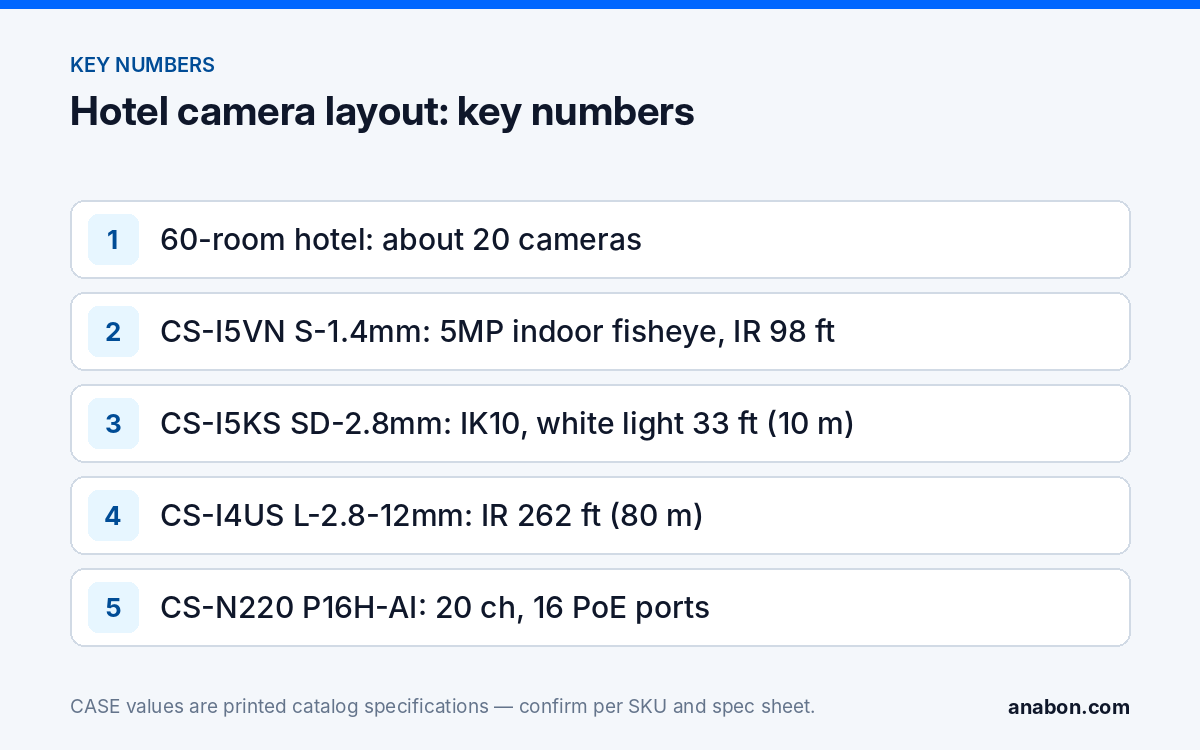
Quick answer: A hotel is public space, guest-only space and private space under one roof, and the camera design follows that line. Record every entrance, the lobby, the front desk, every corridor and elevator lobby, the back-of-house doors, the pool deck and the parking; never record inside guest rooms, restrooms, changing rooms or spa treatment rooms. Frame the desk for the transaction and the face, not the card keypad, keep audio off unless counsel clears it, and hand over named user roles for the general manager, the night auditor and the owner’s representative. A 60-room hotel lands at about 20 cameras on a 20-channel PoE recorder.
Lobby and front desk: what must the first cameras show?
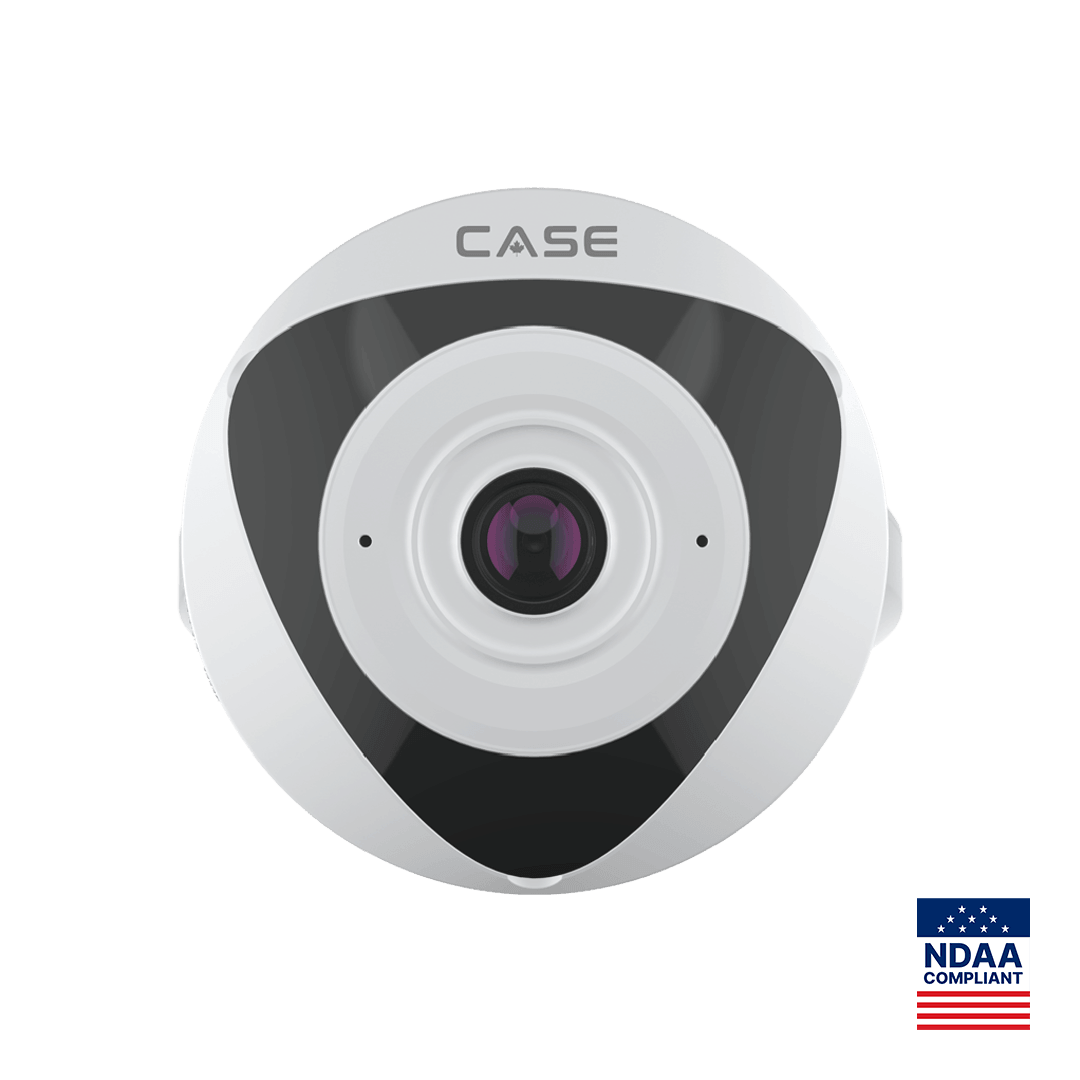
The lobby answers most incident questions: who came in, when, with whom, and what happened at the desk. Three positions cover it. A camera behind and above the desk line faces the guest, so every check-in and cash transaction records a face, mounted at 7 to 8 ft (2.1 to 2.4 m). A camera at the main entrance faces inbound traffic from inside, so a face is recorded on entry against the daylight behind it; the 120dB wide dynamic range printed on the CS-I5KS SD-2.8mm is for that glass-wall doorway. The lobby center takes a ceiling-mounted CS-I5VN S-1.4mm: a 5MP indoor fisheye with a 1.4 mm lens, 2592×1944@30fps and IR 98 ft (30 m), printed for indoor use, covering the seating, the elevator approach and the desk queue in one image. Field of view and view modes are confirmed per model, firmware and software version, so test the dewarped view on the recorder before handover.
- Frame the desk camera on the counter, the guest and the agent; keep the payment terminal keypad out of frame or masked, as card-industry (PCI) security guidance expects.
- Cover the cash drawer and key-card encoder with a second camera if the desk is long.
- Record the luggage store door; it generates claims.
- Put signage at every public entrance; wording differs by state and province, so verify it with counsel.
Corridors and elevators: how do you cover long, dim hallways?
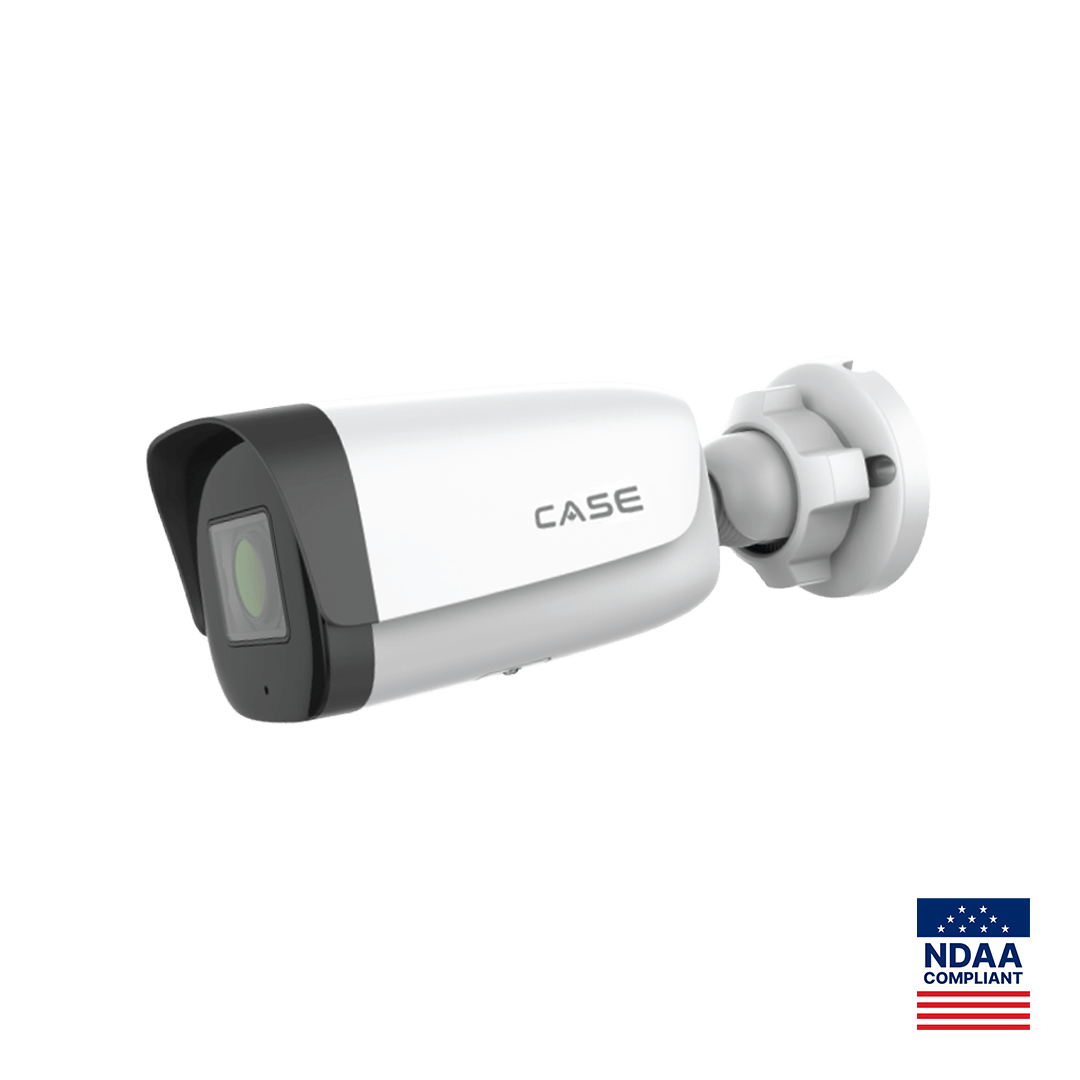
A guest corridor is 5 to 6 ft (1.5 to 1.8 m) wide, 100 to 200 ft (30 to 60 m) long and lit for atmosphere, not for cameras. Mount one camera at each end at 8 to 9 ft (2.4 to 2.7 m), looking along the corridor, so a person walking either way is recorded face-on by one of the pair. The CS-I5KS SD-2.8mm prints IR 98 ft (30 m), white light 33 ft (10 m), IP67 and IK10, and the impact rating matters where luggage carts hit anything within reach. Guest-room doors are in frame; the inside of a room never is, and the angle is set so an open door shows the threshold, not the bed.
Elevator lobbies carry more evidence than the corridor: everyone leaving the floor passes through them. One camera per floor facing the elevator doors records who got on and off, with a time stamp that matches the elevator controller log. A camera inside the cab is a different scope: the traveling cable and cab wiring belong to the elevator contractor under ASME A17.1 (CSA B44 in Canada), so a cab camera is quoted with that contractor and the data path agreed in writing first. Stairwells get a camera at each ground-floor exit door, facing the person leaving; do not block exit signage or door hardware, and verify the local life safety code for anything in an egress path.
| Position | Example CASE SKU | Mount | What it must show |
|---|---|---|---|
| Front desk, agent side | CS-I5KS SD-2.8mm | Ceiling, 7–8 ft (2.1–2.4 m), facing the guest | Face and transaction, keypad out of frame |
| Lobby center | CS-I5VN S-1.4mm | Ceiling, 9–10 ft (2.7–3 m) | Seating, queue, elevator approach in one image |
| Corridor, each end | CS-I5KS SD-2.8mm | Wall or ceiling, 8–9 ft (2.4–2.7 m) | Face-on approach, door thresholds only |
| Elevator lobby, each floor | CS-I5KS SD-2.8mm | Ceiling, facing the doors | Who got on and off, by time |
| Parking rows and drive | CS-I4US L-2.8-12mm | Pole or wall, 12–14 ft (3.7–4.3 m) | Vehicle, driver side, people between cars |
Parking and loading: where do the exterior cameras go?
Vehicle break-ins and slip-and-fall claims live in the parking lot, and both arrive weeks later. Cover the rows from the building face and from a pole at the far end with a motorized varifocal camera, so the lens is set to the row length after the mount is fixed: the CS-I4US L-2.8-12mm prints a motorized 2.8–12 mm lens, IR 262 ft (80 m), 2560×1440@30fps, TWDR, IP67 and −22 °F to 140 °F (−30 °C to 60 °C), with Smart Alarm (Human & Vehicle Detection) in its AI row. The entrance drive gets a camera at 10 ft (3 m) for the driver and the vehicle; plate reading, if the owner wants it, is a dedicated LPR camera confirmed per project.
Receiving is the back door of the hotel: deliveries, linen, waste and staff pass through it. One camera inside facing the door and one outside covering the dock and dumpster corral record what came in and what left. For a colder market, check the printed operating range of every exterior SKU; the CS-I5KS SD-2.8mm prints −31 °F to 149 °F (−35 °C to 65 °C). Runs to the far pole usually pass the 328 ft (100 m) Ethernet limit, so plan fiber or a PoE extender, with surge protection at both ends and bonding per NEC (CEC in Canada).
Privacy zones: where do cameras never go?
Hotels fail on privacy, not on coverage. The list below is the scope boundary written into the proposal, and it is the same in the US and Canada.
- No cameras inside guest rooms, suites, or any space rented to a guest, under any circumstances.
- No cameras in restrooms, locker rooms, changing areas, showers, saunas or spa treatment rooms.
- Pool deck and fitness room: cameras are permitted for liability and are posted with signage; they are not a lifeguard or a supervision system and the proposal must not describe them as one.
- Corridor cameras are angled so an open guest-room door shows the threshold only; where a camera could see into a room or a window, use the camera’s privacy masking, confirmed per model and firmware, and record the mask in the handover.
- Audio stays off by default. US states differ on consent for recording conversations; in Canada, PIPEDA or the provincial law (Quebec Law 25, Alberta PIPA, BC PIPA) governs guest footage and audio raises the bar. Built-in microphones are printed on the CS-I5KS SD-2.8mm, CS-I5VN S-1.4mm and CS-I4US L-2.8-12mm; leave them disabled unless counsel clears a specific position (verify with counsel).
- Retention: a practical starting point is 30 days, and 90 days for lobby, pool and parking where liability claims arrive late; confirm with the owner’s insurer, counsel and brand standard.
Multi-user access: who gets what at handover?
A hotel has more system users than a warehouse: the general manager, the night auditor, the security contractor, the regional director and sometimes the owner’s asset manager. None of them should hold the admin login. Create named accounts with view and playback rights by role on the recorder, keep export rights to two people, and give the general manager CASE Connect for live view and playback on a phone, with app features confirmed by model, software version and project configuration. User Roles and Permissions on CASE NVRs gives the role table. The recorder sits in a locked rack in the back office, not under the front desk, with a UPS and a verified time source, because incident footage is matched to the property management system by time.
Sample camera schedule: a 60-room, three-story hotel
| ID | Position | CASE SKU | Notes |
|---|---|---|---|
| H01 | Front desk, facing guest | CS-I5KS SD-2.8mm | Face and transaction; keypad masked |
| H02 | Lobby center | CS-I5VN S-1.4mm | Indoor fisheye; dewarped view tested |
| H03–H05 | Main, side and employee entrances | CS-I5KS SD-2.8mm | Facing inbound, WDR against daylight |
| H06–H11 | Corridors, both ends, floors 1–3 | CS-I5KS SD-2.8mm | Thresholds only; privacy mask where needed |
| H12–H14 | Elevator lobby, floors 1–3 | CS-I5KS SD-2.8mm | Facing the doors |
| H15 | Pool deck | CS-I5KS SD-2.8mm | IP67; signage; not a supervision system |
| H16–H17 | Receiving door, inside and outside | CS-I5KS SD-2.8mm | Deliveries, linen, waste |
| H18–H19 | Parking rows, building face and far pole | CS-I4US L-2.8-12mm | Lens set to row length; fiber to the pole |
| H20 | Entrance drive | CS-I4US L-2.8-12mm | Driver and vehicle; plates per project |
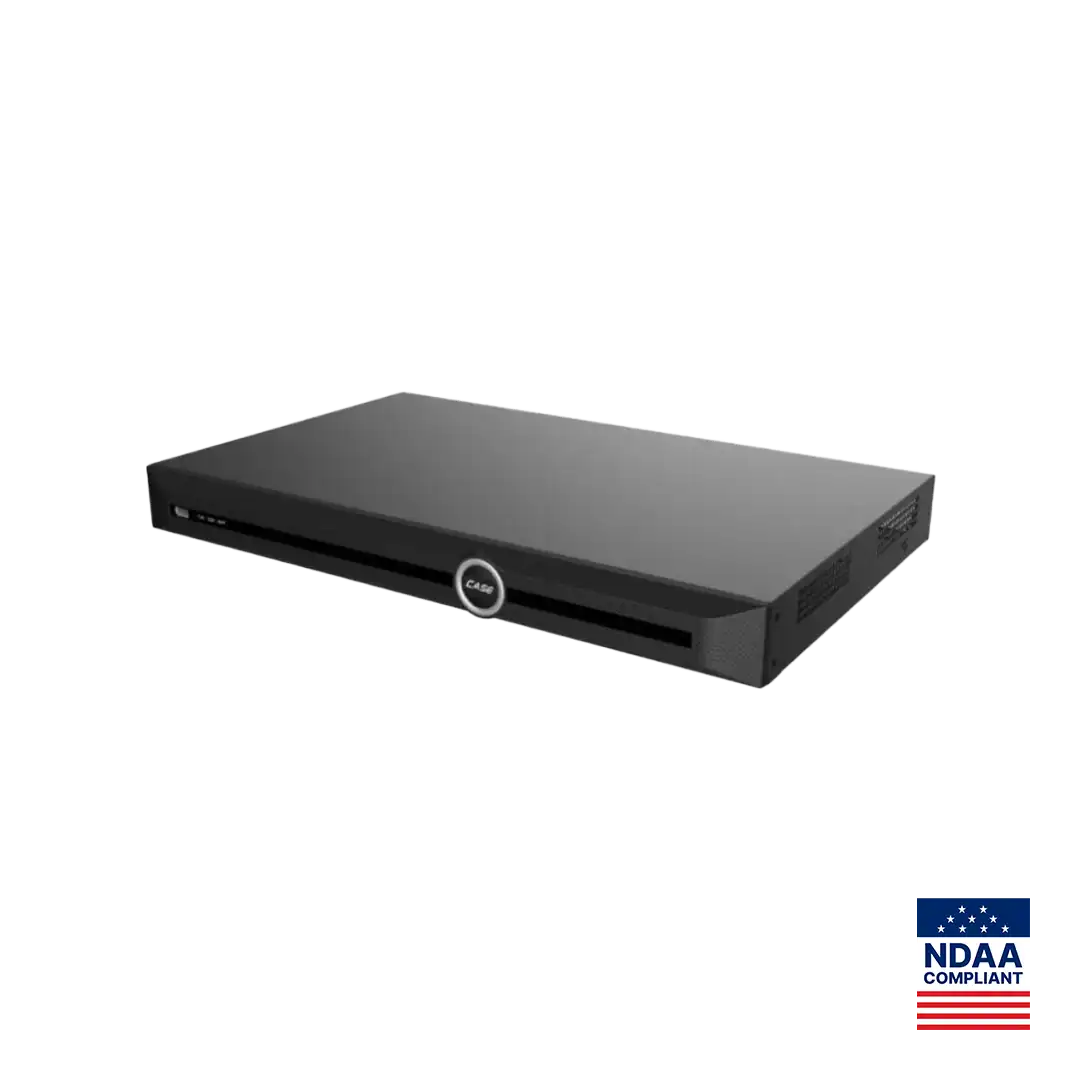
Twenty cameras match the CS-N220 P16H-AI, which prints 20 channels, 16 PoE ports, incoming bandwidth 160Mbps (120Mbps with AI on), one Gigabit uplink and up to 10 TB per HDD; the four cameras beyond the PoE ports arrive through a small PoE switch on the uplink. Its AI by NVR row prints Face Detection, Face Recognition, Tripwire, Double Tripwire, Perimeter and Smart Motion Detection, confirmed per model, firmware and software version. Any facial recognition use in a hotel is a legal review first in every state and province, including Quebec; the default handover leaves it off.
What to tell your customer
“We record every public and staff space a guest or employee passes through: entrances, lobby, desk, corridors, elevator lobbies, pool deck, receiving and parking. We never record inside a guest room, restroom, changing room or treatment room, audio stays off, and the desk camera is framed so no card number is captured. Your managers each get their own login with the rights their job needs, and the general manager can view and play back on CASE Connect. CASE cameras and CASE NVRs carry a 6-year warranty, and support comes through us.”
FAQ
How many cameras does a 60-room hotel need?
About 20 for a three-story, limited-service property with surface parking: one at the desk, one fisheye in the lobby, three entrances, two per corridor on each of three floors, one elevator lobby per floor, the pool deck, two at receiving and three outside. That count matches a CS-N220 P16H-AI, which prints 20 channels and 16 PoE ports.
Can hotel cameras record audio in the lobby?
Leave it off unless counsel clears a specific position. US states differ on whether all parties must consent to a recorded conversation, and in Canada PIPEDA or the provincial privacy law governs guest footage, with audio treated as more intrusive. The microphones printed on the CS-I5KS SD-2.8mm and CS-I5VN S-1.4mm are disabled at handover and the setting is recorded.
Which camera works for a long hotel corridor?
A fixed 2.8 mm camera at each end at 8 to 9 ft (2.4 to 2.7 m), looking along the corridor so one of the pair records every face. The CS-I5KS SD-2.8mm prints IR 98 ft (30 m), white light 33 ft (10 m) and IK10, and the angle is set so an open guest-room door shows only the threshold.
Who gets access to the hotel camera system?
Named accounts by role: view and playback for the general manager and night auditor, export limited to two people, and no shared admin login. The general manager gets CASE Connect for live view and playback on a phone, with features confirmed by model, software version and project configuration. The owner’s representative receives a documented role list at handover.