


Quick answer: A dealership needs more than a wide picture of parked cars. Define what must be reviewed at entrances, service intake, key storage and handover. Keep essential views fixed, test the real night scene and separate general vehicle movement from plate capture or a vehicle-condition record.
On this page
Start with the vehicle’s route
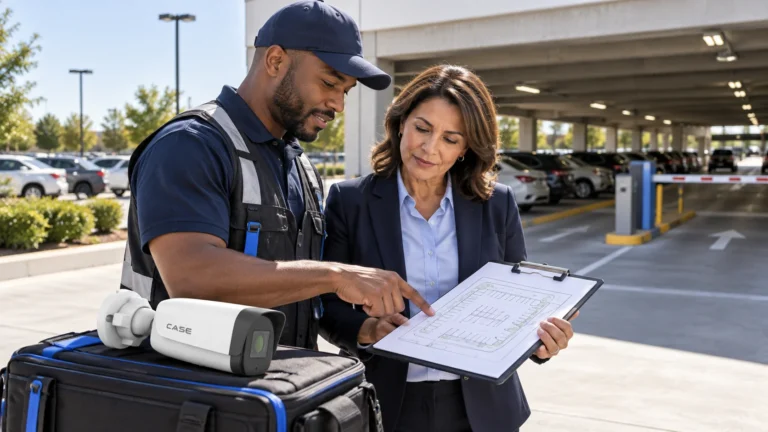
Walk with the dealership manager from the public road through customer parking, the service queue and the delivery area. Ask which incidents cause repeat disputes: a missing key, a vehicle moved after hours, an arrival time or alleged damage. Give each requested view a specific purpose. A three-hundred-car lot with twelve service bays is a useful survey example, not a twenty-five-camera rule. Stock density, ramps, buildings, fencing and temporary banners can change the useful view. Inspect with the lot stocked normally rather than accepting an empty-lot drawing. Use the camera schedule template to record each view, its purpose and acceptance check.
Keep different evidence tasks separate
Choose IP cameras after measuring scene width, distance and lighting. An overview can explain where a vehicle went; it may not show its plate or the condition of a body panel. Put those different tasks into the camera schedule and customer acceptance record.
| Location | Task | Test |
|---|---|---|
| Lot entrance | Vehicle arrival and direction | Drive the normal route in daylight and after dark. |
| Service intake | Arrival and the agreed vehicle-condition view | Position the actual vehicle and check each requested angle. |
| Keys or parts counter | Access to the approved storage or handover point | Test hands, obstructions and confidential paperwork. |
| Display lot and perimeter | Movement through nominated routes | Check parked stock, headlights and temporary displays. |
If the customer needs a damage record, define the inspection workflow and its limits. One ceiling or lot camera cannot prove every surface was undamaged. Multiple controlled views or a separate inspection process may be required; make that decision before promising what footage will resolve.
Treat plates and PTZ as specific requirements
Distinguish reviewing a vehicle, capturing a readable plate and automatically recognizing a plate. For a plate task, establish the capture point, direction, distance, movement and lighting, then have the exact supported device and software configuration reviewed. Do not promote a retired model or imply a general search menu validates every camera for LPR. A PTZ can help an operator inspect a chosen part of the lot, but it faces one direction at a time. Keep the agreed entrance and key routes covered when the PTZ looks elsewhere. Demonstrate the intended operator workflow and any accepted recording gaps. The parking-lot camera planning guide helps organize the separate entrance and night-scene tasks.
Test the lot after the sales lights change
Return when display lighting is reduced and the service bays are closed. Record an authorized vehicle entering, stopping and leaving with normal headlights. Review saved clips at the proposed settings. Shiny bodywork, bright signs and a dark pedestrian route may need different positions or additional appropriate lighting. Test any approved audible or visible deterrence separately. Confirm the exact device support, trigger, schedule and response contact. Avoid nuisance activation onto the road or neighbouring property, and never describe a light or warning as guaranteed prevention.
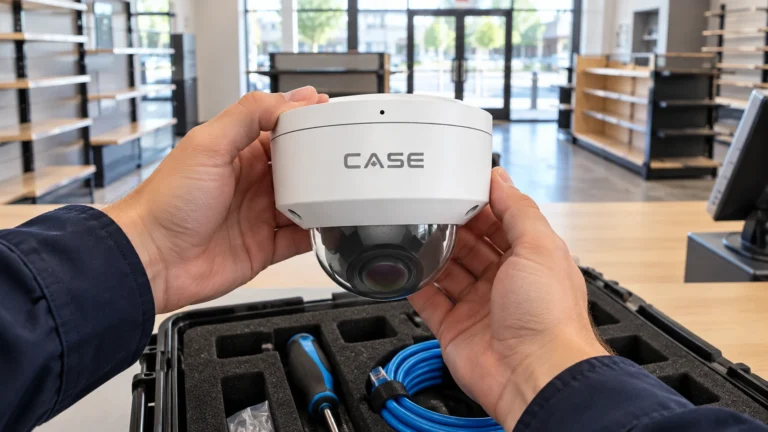
Equipment example for review: CS-I8XQ II-2.8mm. Confirm the exact revision’s data sheet and warning-light, microphone and speaker support in writing before quotation. Agree the permitted actions, trigger, schedule and response for this site. Hardware capability does not authorize audio recording or create a monitoring or prevention guarantee.
Leave capacity for the stock plan to change
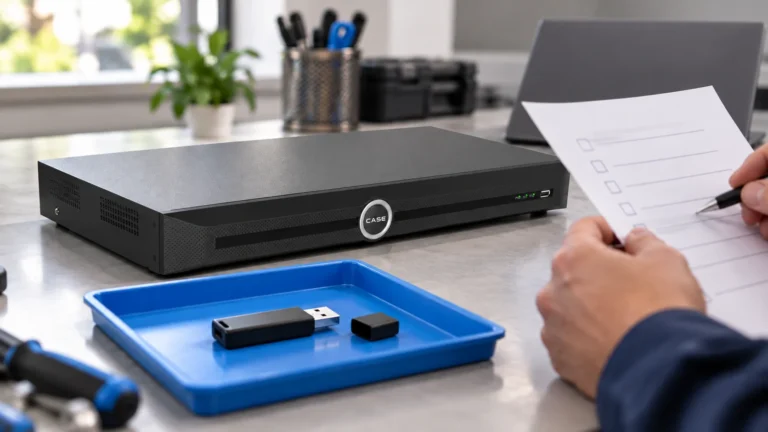
Size the recorder for the actual channels, supported incoming bandwidth, usable disks, simultaneous review and agreed expansion. Calculate storage from the approved target and stream schedule. A dispute discovered days later is a planning input, not a legal retention rule; agree preservation before overwrite. Check PoE loads, uplinks and power at remote poles and buildings with the customer’s IT contact. Safely test the agreed link-loss scenario and document which local recordings continue and how recovery is checked. A sample rack or advertised channel total does not prove every proposed configuration.
Hand over a review process, not just a password
Separate sales viewing, service review and administration with named accounts. Frame counters clear of readable customer records and payment details. Have the responsible adviser establish the actual notices, retention and disclosure rules. OPC overt-surveillance guidance addresses private organizations in publicly accessible areas and excludes employee and covert surveillance; it does not establish every workplace or US requirement. Keep the agreed purpose and access limits explicit.
Run a harmless arrival-to-intake test, retrieve and export the sequence, then replay it with the authorized manager. Confirm labels and timestamps. Leave the as-built plan, accepted views, firmware record, exact-model documents and customer-controlled account ownership/recovery. Use the customer handover checklist to record roles and incident-preservation responsibilities. Schedule review after changes to stock rows, fencing or lighting, with safe cleaning and service access arranged around parked vehicles.
FAQ
Can a single PTZ cover a large dealership continuously?
It cannot view every direction at once. Keep required fixed evidence views and use the PTZ only for its agreed supplementary role.
Will a lot camera settle every damage dispute?
No. Agree the visible surfaces, lighting and inspection procedure. Explain and document what the accepted views cannot establish.
Review the dealership evidence schedule
Send security camera technical support the stock layout, vehicle routes, service workflow, night photographs and approved recording target. Identify which plate, vehicle-condition and integration requirements need separate confirmation.
References
References reviewed October 30, 2026. OPC overt-surveillance guidance (March 6, 2008), within its stated private-sector/public-area scope; confirm actual workplace and privacy obligations. CASE catalog physical page 18 contains I/II variant columns; use the exact revision’s written data sheet before a feature commitment. No site result or product availability is guaranteed here.