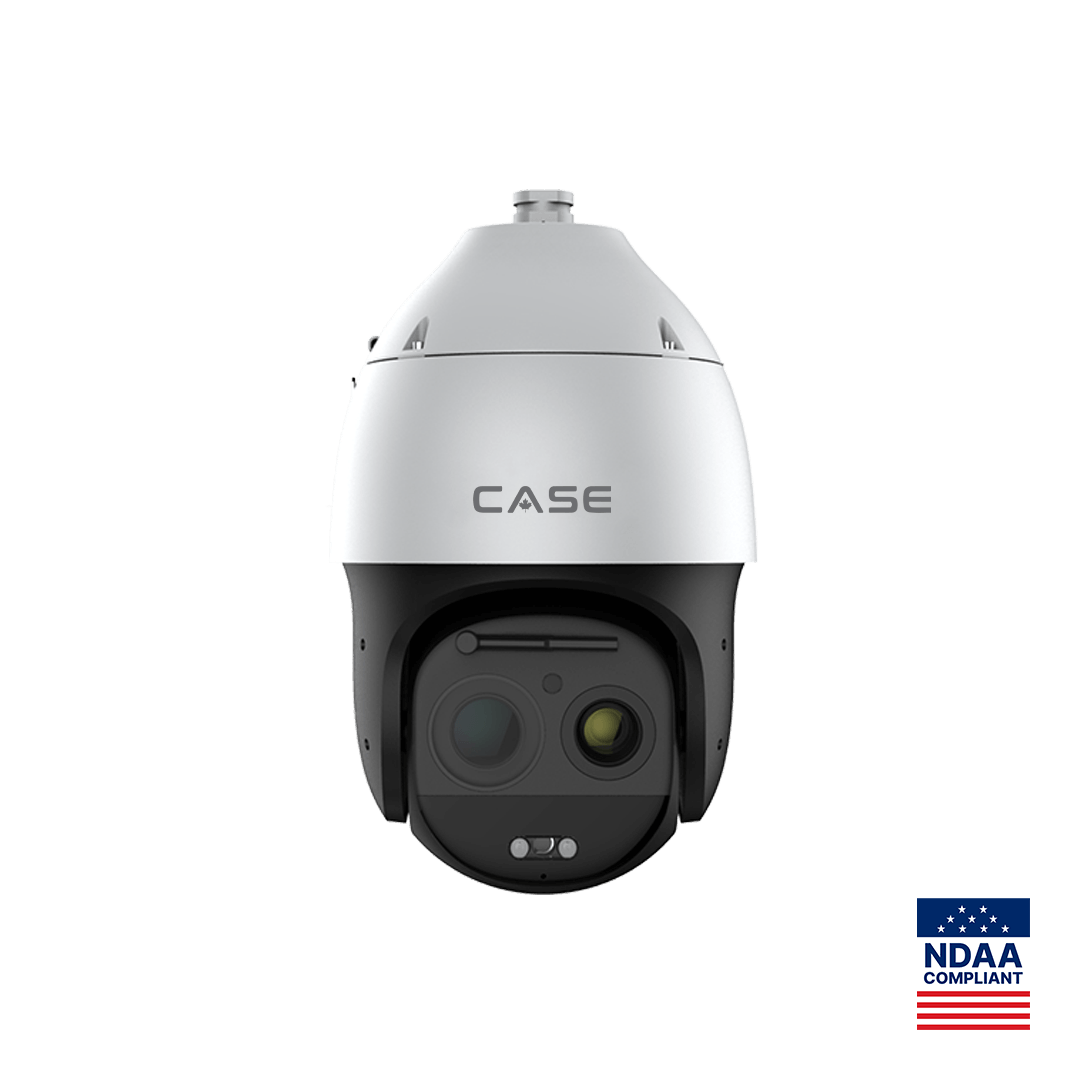


Quick answer: A pole-mounted PTZ is the highest, most exposed and highest-value electronic device on most sites, connected to the building by a long copper cable, which is why it is the first thing a storm damages. Protect it in layers: a PoE pass-through surge protective device (SPD) at the camera end and another where the cable enters the building, both bonded to ground with short leads; a bonded pole; and, between detached structures, fiber instead of copper. The CS-P48 63X prints “TVS 6000V Lightning Protection, Surge Protection and Voltage Transient Protection” as a built-in specification; built-in protection reduces risk and never promises immunity, so the external SPDs and the ground are still your job.
Where do surges enter a camera system?
Direct strikes are rare and destroy whatever they hit. The damage installers actually see comes from the three indirect paths below, and all three run along copper.
| Entry path | What happens | Usual victim | First defense |
|---|---|---|---|
| Induced surge on the data cable | A nearby strike induces a voltage pulse along a long Ethernet run, especially one on a pole or between buildings | Camera network port, switch port | SPD at both ends of any exterior run |
| Ground potential rise | Strike current entering the earth lifts the pole ground thousands of volts above the building ground for a few microseconds; the cable becomes the equalizing path | Camera and switch together | Bonding, SPDs referenced to the same ground, or fiber |
| Power-line surge | Utility or lightning transients arrive on the AC feeding the switch, recorder, PoE injector or PTZ power supply | Power supplies, recorder | AC SPD and a UPS at the rack and in pole enclosures |
A pole PTZ collects all three. It is the tallest conductor in the lot, it sits on a metal pole with its own ground, its cable is the longest on the site, it uses a higher power class and it carries more electronics than any fixed camera. Treat every pole position as a surge design problem first and a camera position second.
What protection do CASE PTZs print on the spec page?
Quote the Protection row exactly as the catalog prints it, per SKU, and nothing more. Three CASE PTZs suited to pole positions print three different rows.
| SKU | Protection row (as printed) | Power row (as printed) | What it means for the design |
|---|---|---|---|
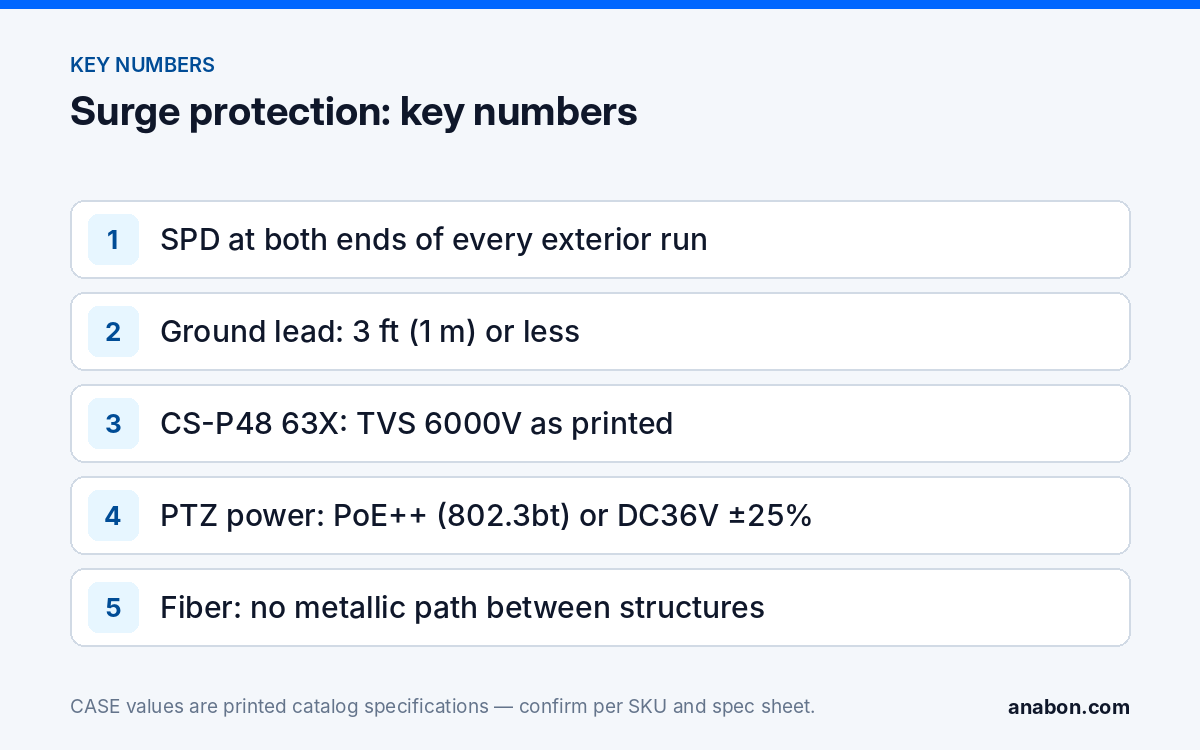
| CS-P48 63X | IP66, TVS 6000V Lightning Protection, Surge Protection and Voltage Transient Protection | DC36V ±25%, PoE++ (IEEE 802.3bt) | Transient-voltage-suppression diodes on the ports; external SPDs still required |
| CS-P88 44X | IP66 | DC36V ±25% / PoE++ (IEEE 802.3bt) | No surge figure printed; ask Anabon for the spec sheet before stating one |
| CS-P58 T-44X | IP66, Lightning Protection, Surge Protection and Voltage Transient Protection meets EN 55035:2017 | No power row printed | Immunity standard named, no voltage figure; confirm power class on the spec sheet |
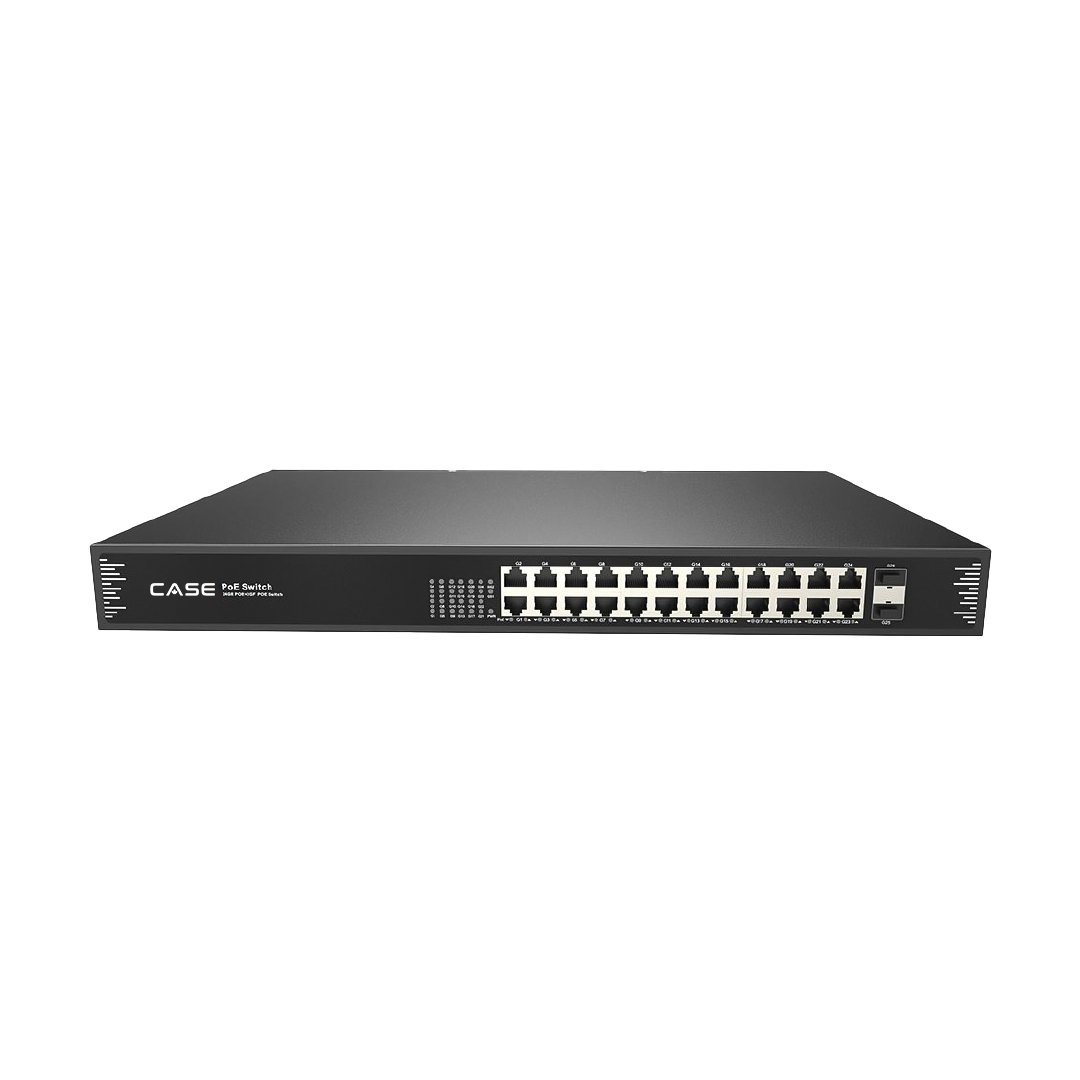
A TVS (transient-voltage-suppression) diode clamps a fast pulse at the port so the camera’s electronics see a limited voltage; “6000V” is the printed rating of that built-in stage (confirm its test basis on the spec sheet), not a guarantee of survival. EN 55035 is an electromagnetic immunity standard for multimedia equipment, which tells you the unit was tested against defined disturbances, again without promising that a lightning event stays within them. Both figures are reasons to include the camera in a design; neither replaces the design. The same reading applies to the PoE layer: the CS-POE33024PF and CS-POE33108PF print “4KV lightning protection” and the CS-H1108PLS prints “4KV lightning”; useful at the port, no substitute for an external device.
CASE PTZ cameras carry a 3-year warranty. Whether a specific surge-damaged unit is covered is decided case by case through the RMA process via your business account; do not promise the customer an outcome either way.
Where do inline surge protectors and grounds go?
An SPD only works as well as its ground lead. Every placement rule below is about making the path to ground shorter than the path through the camera.
- Camera end. A PoE pass-through SPD inside the pole-top or pole-base enclosure, as close to the camera as possible, bonded to the pole ground with a lead of 3 ft (1 m) or less.
- Building entry. A second SPD where the cable enters the building, bonded to the building grounding electrode system or the telecom bonding busbar, again with the shortest lead you can route. Do not share the lead with other equipment.
- Power class. The SPD must pass the power the camera uses: 802.3bt for a PoE++ PTZ such as the CS-P48 63X or CS-P88 44X, 802.3at for a 30W fixed camera. An SPD rated below the class either blocks power or fails.
- Data rate. Specify the SPD for the link speed in use (1 Gb/s on a PoE switch port; 100 Mbps is enough on an NVR PoE port).
- Pole bonding. Bond the pole, the enclosure and the camera bracket to the pole ground electrode; where the site has a lightning protection system under NFPA 780 (in Canada: CSA B72), coordinate with that contractor rather than adding electrodes on your own.
- Same reference. Where copper runs between pole and building, the two grounds must be bonded so the SPDs clamp to a common reference; where that is impractical, use fiber.
- AC side. Any AC in a pole enclosure, for a PoE++ injector, a DC36V supply or a remote switch, gets its own AC SPD.
| SPD selection point | What to specify |
|---|---|
| Listing | Listed for data-line protection (UL 497B in the US / ULC equivalent in Canada); verify the local code |
| PoE pass-through | Class matching the camera: 802.3af, 802.3at or 802.3bt |
| Data rate | 1000BASE-T where the switch port is Gigabit |
| Ground connection | Dedicated lug; lead 3 ft (1 m) or less; conductor per NEC Article 250 and Chapter 8 (CEC Sections 10 and 60) |
| Serviceability | Replaceable module or a unit you can swap without re-terminating the run |
Shielded cable on a pole run, with the shield bonded at the building end, can reduce induced energy on the pairs, but it is not a substitute for the SPDs and bonding above. The general wiring rules are in the security camera wiring guide.
When is fiber the right isolation?
All-dielectric fiber has no metallic conductor, so a surge on the pole side has no path to the building, and ground potential rise between two structures stops mattering. It is the right answer whenever a run crosses between separate structures, whenever the copper would exceed 328 ft (100 m), and whenever the site has a history of equipment loss in storms.
- Put a small PoE switch or media converter in the pole base with local AC, protected by an AC SPD and a UPS where the budget allows.
- Uplink it over fiber to an SFP port at the head end; the CS-POE33024PF and CS-POE33108PF each print 2×1000M SFP fiber ports.
- Power the PTZ locally from that enclosure: the CS-P48 63X and CS-P88 44X print PoE++ (IEEE 802.3bt) or DC36V ±25%, neither of which a standard 802.3af/at switch supplies, so budget a bt-class injector or a DC supply per the spec sheet.
- Keep a short copper SPD on the camera lead inside the enclosure anyway; the pole-top camera and the pole-base electronics still share a copper link.
Fiber moves the surge problem from the building to the pole enclosure, where it is smaller and local. It does not remove the need for a bonded pole and a protected AC feed.
What do you document for the customer?
Surge protection is invisible after installation, so the documentation is the only proof it exists and the only way the next technician maintains it.
- SPD model, location and PoE class for every protected run, marked on the as-built drawing and labeled at the device.
- Ground connection points photographed and described: pole electrode, telecom busbar, building electrode system, bonding jumpers.
- Ground resistance reading where one was taken, with the instrument and date.
- A replacement note: SPDs are sacrificial and degrade after taking hits; inspect indicators annually and after any known strike, and budget replacements into the service agreement.
- Scope statement: the installation includes data-line and local AC surge protection and bonding; it does not include a structural lightning protection system unless that is a separate line item under NFPA 780 (CSA B72 in Canada).
- The exact warranty line: CASE PTZ cameras carry a 3-year warranty, handled through you as the installer; surge events are assessed case by case.
Put the SPD inspection on the same calendar as firmware and drive checks; the format is in Service agreements and recurring revenue. For the PTZ selection itself, see PTZ cameras: auto tracking, laser deterrence and when fixed cameras are enough.
What to tell your customer
“Cameras on poles are the most exposed equipment on your property during a storm. We install surge protectors at the camera and where the cable enters the building, bond the pole, and use fiber where cameras sit on a separate structure. This reduces the risk of storm damage substantially; no system can promise immunity from a direct strike, and the surge protectors themselves are inspected and replaced as part of your service plan.”
FAQ
Does the TVS 6000V figure on the CS-P48 63X mean it is lightning-proof?
No. The row reads “IP66, TVS 6000V Lightning Protection, Surge Protection and Voltage Transient Protection” and describes a built-in transient-voltage-suppression stage at the ports. It lowers the risk from ordinary transients; it does not promise survival of a strike. External SPDs at both ends of the run, a bonded pole and a proper ground remain part of the design.
Where exactly should a PoE surge protector be installed?
At both ends of any run that leaves the building: one inside the pole enclosure as close to the camera as practical, one where the cable enters the building, each bonded to ground with a lead of 3 ft (1 m) or less. Choose a pass-through unit rated for the camera’s power class, 802.3bt for a PoE++ PTZ, and for the link speed in use.
Why is fiber recommended between a pole and the building?
All-dielectric fiber carries no metallic conductor, so a surge or a ground potential difference on the pole side has no path into the building, and there is no 328 ft (100 m) distance limit. The pole then needs local power for a small switch or media converter and for the PTZ, protected by an AC surge device, and the CS-POE33024PF and CS-POE33108PF print SFP ports for the fiber link.
Is surge damage to a PTZ covered by the CASE warranty?
CASE PTZ cameras carry a 3-year warranty, handled through the installer or dealer who supplied the system. Whether a unit damaged by a surge event is covered is decided case by case through the RMA process via your business account, so do not promise the customer either outcome. Documented SPDs, bonding and photographs make that conversation factual.
Do the built-in protections on CASE PoE switches replace an external surge device?
No. The CS-POE33024PF and CS-POE33108PF print “4KV lightning protection” and the CS-H1108PLS prints “4KV lightning”; these are port specifications against ordinary transients. Any run that leaves the building still needs an external surge protective device at the entry point with a short ground lead, and pole runs need one at the camera end as well.