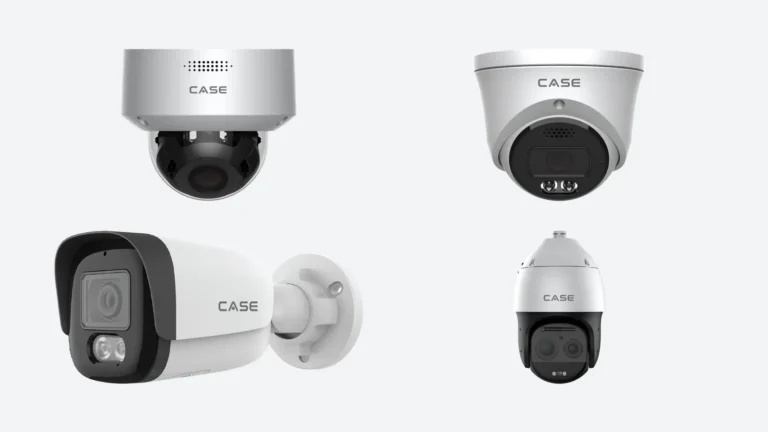



Quick answer: A fire detection camera gives an early video alert; it never replaces the fire alarm system the code requires. The CS-P58 T-44X prints thermal fire/smoke detection of a 6.6 ft × 6.6 ft (2 m × 2 m) fire at 9,843 ft (3,000 m). Check the alert path, recorder and site conditions with Anabon before you quote.
What is a fire detection camera, and what is it not?
A fire detection camera is a surveillance camera with an analytic that raises an event when the scene shows signs of flame, smoke or heat. That event goes to the recorder and to the people who watch it, where the camera, recorder and firmware support it. It is an extra pair of eyes for large or open areas that point detectors do not cover well, such as yards, roofs, stockpiles and long perimeters.
It is not a listed fire alarm device. A required fire alarm and detection system is designed, installed and approved under the applicable code and the authority having jurisdiction (AHJ). Write that sentence into every proposal that includes a fire analytic, so the customer never reads the camera as a substitute.
Thermal or visible-light analytics: which one fits the job?
There are two ways a camera can flag fire. A thermal channel senses long-wave infrared from the scene and does not need visible light. A visible-light analytic reads the normal video image for smoke and flame patterns, so it depends on light, contrast and a clear view. Neither works through walls, and both are affected by distance, weather and what else in the scene is hot or moving.
| SKU | Type | Fire function as printed | What to confirm |
|---|---|---|---|
| CS-P58 T-44X | Bi-spectrum thermal PTZ (thermal 384×288, optical up to 3072×1728@30) | Thermal lens analytics: Fire / Smoke Detection; fire detection distance: fire (2m×2m) 3000m (6.6 ft × 6.6 ft at 9,843 ft) | Preset positions, alert path to the recorder, mounting stability and site sight lines |
| CS-I5LQ I-T-4mm | Bi-spectrum thermal bullet (thermal 256×192@25, optical 2880×1620@30) | Thermal icon and temperature detection ranges; no fire detection distance printed | Any fire function and distance only from the spec sheet |
| CS-I5XQ II-2.8mm | Intelligent II turret, 5MP | Visible Light Smoke & Fire Detection in the extended AI suite | Lighting, field of view and false-alert sources in the scene |
| CS-I8XQ II-2.8mm | Intelligent II turret, 8MP | Visible Light Smoke & Fire Detection in the extended AI suite | Lighting, field of view and false-alert sources in the scene |
The printed 9,843 ft (3,000 m) figure for the CS-P58 T-44X describes a 6.6 ft × 6.6 ft (2 m × 2 m) fire under the catalog test conditions. Detection on site depends on the size and temperature of the fire, the atmosphere, the background and the lens position. Treat it as a spec-sheet figure, not a site promise. For the theory behind thermal and IR, see thermal vs infrared cameras.
Where do fire analytics add value on a commercial site?
- Outdoor storage yards, pallet and tire stacks, recycling and mulch piles, where a fire can start far from any building detector.
- Long perimeters and open lots that are already covered by a PTZ, so one camera adds an early alert to an existing patrol view.
- Loading docks, roofs and equipment pads where staff are not present at night.
- Remote and unattended sites, where an early video alert can help a monitoring team decide what to do next.
Indoors, fire analytics are best treated as a supplement in areas already protected by the required system. Visible-light analytics need light and a clear view; steam, dust, sunlight reflections and vehicle lights can all raise false alerts, so plan a test period before the customer relies on the event.
How do you scope a fire detection camera project?
- Ask the customer what the alert must achieve and who will receive it. Record that the required fire alarm system stays in place.
- Walk the site and mark the areas to watch, the camera positions and the sight lines. Note heat sources such as exhausts, heaters, engines and reflective roofs.
- Choose thermal for open areas, darkness and long distance; choose a visible-light II turret where the area is lit and close.
- Plan the recorder, storage and network path. See AI NVRs explained and the NVR storage calculator.
- Agree a test window, document the results and hand over the alert settings with the system.
What about hazardous areas and large thermal projects?
Explosion-proof and long-range thermal units are part of the CASE Project Series (CSP- prefix). Some print fire functions, for example CSP-I640R IT-13/19/25 (Fire Detection) and CSP-I1280R4 IZ-350/1200mm (Fire & Smoke Detection). These items are project-quoted: Anabon confirms availability, documentation and terms in writing for each project. Start with the CASE Project Series overview and the explosion-proof camera guide.
What to tell your customer
Say three things in plain words. The camera can give an early video alert in areas that are hard to cover. It does not replace the fire alarm system that the code requires. The alert will be tested on site before anyone relies on it. That keeps the promise honest and protects you at handover.
FAQ
Can a fire detection camera replace smoke detectors?
No. A camera analytic is a supplementary video alert. Smoke detectors and the rest of the required fire alarm system are designed and approved under the applicable code and the AHJ. Keep them in place and describe the camera as an extra early-warning layer in the proposal.
Which CASE camera prints a fire detection distance?
CS-P58 T-44X. Its 2027 Q1 catalog page prints fire detection for a 6.6 ft × 6.6 ft (2 m × 2 m) fire at 9,843 ft (3,000 m), with Fire / Smoke Detection in the thermal analytics. CS-I5LQ I-T-4mm prints no fire distance, so take any figure for it only from the spec sheet. See the CS-P58 T-44X guide.
Do visible-light smoke and fire analytics work at night?
Only if the scene has enough light and contrast. The Visible Light Smoke & Fire Detection function on CS-I5XQ II-2.8mm and CS-I8XQ II-2.8mm reads the normal video image. For dark or open areas, plan a thermal channel and test the alerts on site.
Who confirms a Project Series thermal camera for a bid?
Anabon. CSP- items are quoted per project, and Anabon sets availability, documentation and terms in writing for each one. Send the site, the task and the drawings early. Request a project review before the bid closes.
Send the site plan, the areas to watch and the required alert path to Anabon Technical Support and bring us the opportunity before you say no.